

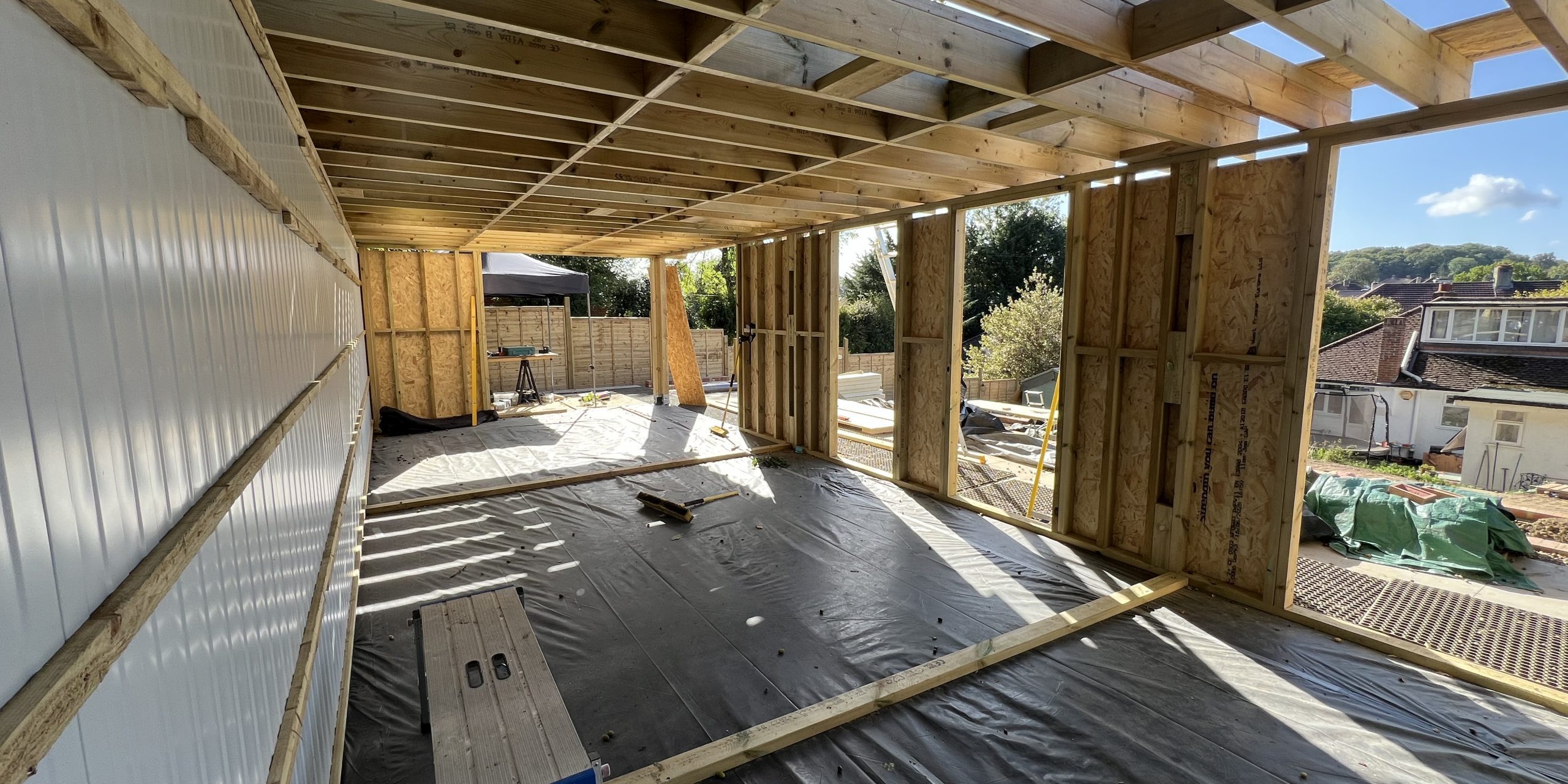
A garden room extension in the UK typically costs between £20,000 and £50,000 in 2026, depending on the size, specification, and what is included in the quote. For a fully insulated, year-round building with electrics and internal finishing, expect to pay £1,500 to £2,200 per square metre. That puts a 12 sqm garden room at around £20,000 to £28,000, while a 24 sqm room comes in at roughly £32,000 to £44,000.
We have been building garden rooms across SE London, Kent, Surrey, and Sussex since 2004, with over 1,000 completed projects. This guide covers everything you need to budget for, including the costs people often forget about until it is too late.
Garden Room Extension Cost by Size
Size is the single biggest factor in what you will pay. Here is how the numbers break down across standard sizes:
Small garden rooms (7 to 12 sqm)
A room in this bracket works well as a home office or personal studio. Budget £16,000 to £28,000 for a fully finished build. Per square metre, smaller rooms cost more because fixed expenses like foundations, electrics, and delivery are spread across less floor area.
Medium garden rooms (15 to 20 sqm)
This is the most popular size range. You get enough space for a proper office, treatment room, or music studio with room to move around. Expect to pay £24,000 to £40,000. At this size, you start seeing better value per square metre.
Large garden rooms (24 to 32 sqm)
These larger buildings suit home gyms, multi-use family spaces, or garden annexes. Costs range from £32,000 to £55,000. Per square metre, this is where you get the best value, though buildings over 30 sqm will need building regulations approval, which adds to the total.
For reference, our own range covers most of these sizes. The Midi (4.0m x 3.0m, roughly 12 sqm), Maxi (5.0m x 3.5m, roughly 17.5 sqm), Multi (6.0m x 4.0m, roughly 24 sqm), and Multi+ (7.0m x 4.5m, roughly 31.5 sqm). You can see current pricing on our buildings and prices page.
What Is Typically Included in a Garden Room Quote
This is where the real budget traps sit. Two companies can quote the same headline price, but one includes everything while the other leaves out foundations, electrics, and VAT. Always ask what the total cost will be for a finished, usable room.
A proper turnkey quote should cover:
- Foundations (concrete pad, ground screws, or steel frame base)
- Full structural build with insulated walls, floor, and roof
- External cladding and weatherproof membrane
- Windows and doors (double or triple glazed)
- Internal wall and ceiling lining
- Electrical first fix and second fix (consumer unit, sockets, lighting)
- Flooring
- Delivery, crane hire if needed, and full installation
- VAT
At Garden Office Buildings, all of the above is included in our pricing. We do not advertise a low figure and then present a list of extras once you have committed.
Additional Costs That Catch People Out
Even with a good all-inclusive quote, there are a few things that usually sit outside the main build price. Factor these into your overall budget from the start.
Mains electrical connection: £1,500 to £3,500
Your garden room needs its own dedicated electrical supply run from your house. The cost depends mainly on distance. A room 10 metres from the house is straightforward. A room 30 metres away at the bottom of the garden, with the cable needing to cross a patio or driveway, will cost more because of the extra cable and groundwork. A qualified electrician will install a dedicated circuit and issue a Part P certificate, which is a legal requirement.
Site preparation: £500 to £3,000
If your garden is reasonably flat and accessible, preparation is minimal. But if there is an old shed to remove, a sloping site that needs levelling, trees or roots to clear, or narrow side access that limits how materials reach the garden, costs can add up. Some companies include basic site prep in their quote. Others expect the site to be cleared before they arrive.
Plumbing: £1,500 to £4,000
A standard garden office does not need plumbing, but if you want a toilet, sink, or shower (for a garden annexe, gym, or treatment room), you will need water supply and drainage run from the house. The further the room is from existing drains, the more this costs. Waste water connections can be particularly expensive if the route is difficult.
Heating and cooling: £500 to £2,500
Some garden room companies include an electric panel heater. Others offer air conditioning units as an upgrade. A well-insulated room with 100mm PIR insulation (the standard we use) holds heat well, so a single electric heater or a small air source unit is usually enough. An air conditioning unit that provides both heating and cooling typically costs £1,200 to £2,500 fitted.
Internal decoration and furniture
Your garden room will be delivered with finished internal walls and flooring, but furnishing it is down to you. Budget for desks, chairs, shelving, and any personal touches. Painting or wallpapering internal walls typically costs £10 to £20 per square metre if you hire a decorator, or next to nothing if you do it yourself.
Internet connectivity
Most people run Wi-Fi from the house, which costs nothing if your router signal reaches. If it does not, a Wi-Fi extender or mesh system costs £50 to £200. For a hardwired ethernet connection, expect to pay £200 to £500 depending on the distance and route.
Garden Room Extension vs Traditional House Extension
This is the comparison most people are weighing up, and the numbers make a clear case.
A single-storey house extension in London and the South East costs between £2,000 and £3,500 per square metre for the build alone. A 20 sqm rear extension will typically cost £40,000 to £70,000 before you account for professional fees and finishing. In parts of Central London, that figure can reach £80,000 or more.
On top of the raw build cost, a traditional extension requires:
- Architectural drawings: £1,500 to £5,000
- Structural engineer: £500 to £1,500
- Planning permission application: £528 in England (doubled from April 2025)
- Building regulations application and inspections
- Party wall agreements: £700 to £1,500 per neighbouring property
- A build timeline of 10 to 18 weeks, with your home used as a building site the entire time
A garden room of equivalent size at £1,500 to £2,200 per sqm, installed in one to three weeks with no disruption to your home, is a very different proposition. You also get a dedicated, separate space rather than extending an already busy household.
That said, a traditional extension does add directly to your home’s internal square footage, which typically delivers a higher return on resale. Garden rooms add an estimated 5 to 10 percent to property value, while a well-designed extension adding a bedroom or open-plan kitchen can return more. The right choice depends on what you actually need the space for.
Planning Permission and Building Regulations
Most detached garden rooms fall under Permitted Development rights, meaning you do not need planning permission. The key rules are:
- The building must be single storey, with a maximum eaves height of 2.5m
- Maximum overall height of 4m (dual pitch roof) or 3m (flat or mono pitch)
- If within 2m of the boundary, maximum height is 2.5m
- Total outbuildings must not cover more than 50% of the garden area
- The room must not be in front of the principal elevation of the house
If your property is a listed building, in a conservation area, or subject to an Article 4 Direction, you will almost certainly need a full planning application. For more detail, see our planning permission and building regulations guide.
For building regulations, rooms under 15 sqm (internal) with no sleeping accommodation are generally exempt, apart from Part P electrical compliance. Rooms between 15 and 30 sqm are exempt provided there is no sleeping accommodation and the building is either 1m or more from any boundary or built from non-combustible materials. Rooms over 30 sqm require full building regulations approval.
How to Keep Your Garden Room Extension Cost Down
There are a few practical ways to reduce the total bill without cutting corners on quality:
- Choose a standard size. Bespoke designs cost more because they require custom engineering and fabrication. Our standard range covers most needs and keeps costs lower.
- Position the room close to the house. This reduces the cost of the electrical connection and any plumbing runs. Every extra metre of cable trench adds to the bill.
- Prepare the site yourself. Clearing old sheds, cutting back vegetation, and ensuring access is clear before the build team arrives can save £500 to £1,500.
- Skip the plumbing unless you need it. A garden office does not need a toilet. If the house is only 20 metres away, most people find that perfectly workable.
- Get a turnkey quote. Buying the cheapest shell and then hiring separate trades for foundations, electrics, and finishing almost always costs more than an all-in price from one company.
If you want to explore different configurations, our bespoke garden rooms page shows what is possible when a standard layout does not quite fit.
A Realistic Budget Summary
Pulling all of this together, here is what a realistic total budget looks like for a fully finished garden room:
| Item | Typical Cost |
|---|---|
| Garden room (turnkey, installed) | £20,000 to £50,000 |
| Mains electrical connection | £1,500 to £3,500 |
| Site preparation (if needed) | £500 to £3,000 |
| Plumbing (if needed) | £1,500 to £4,000 |
| Heating/cooling upgrade | £500 to £2,500 |
| Furniture and decoration | £500 to £3,000 |
| Internet (extender or ethernet) | £50 to £500 |
For a mid-size garden office with no plumbing, a typical all-in budget of £28,000 to £38,000 covers everything. For a larger room with a bathroom or kitchenette, budget £40,000 to £60,000.
Save £5,000 with Our Ambassador Programme
If you would like to reduce your garden room extension cost, ask us about our Ambassador Programme. Ambassadors allow us to use their completed garden room for photography and a small number of viewing visits from prospective customers. In return, you save £5,000 off the build price. It is a simple arrangement that benefits both sides, and it is one of the best ways to bring a quality build within a tighter budget.