

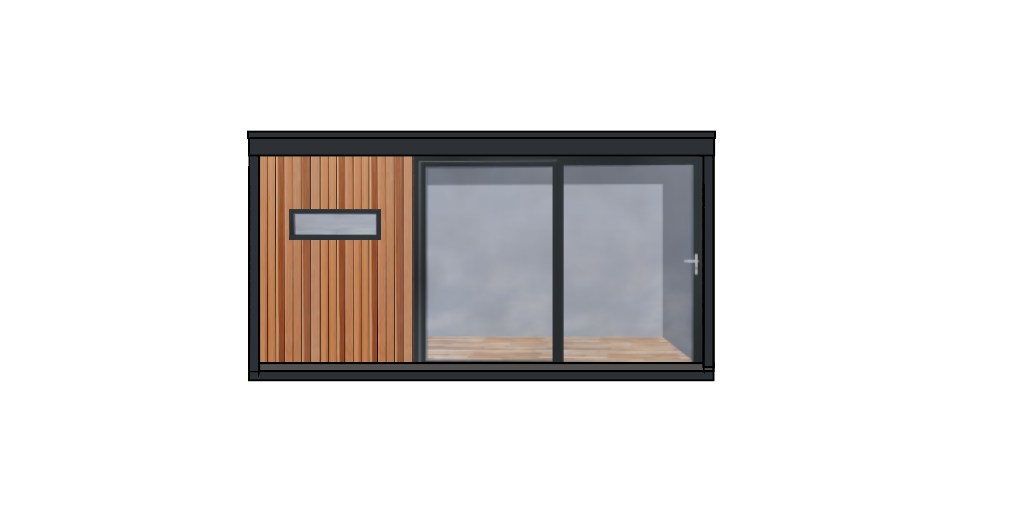
A garden games room is one of the most enjoyable things we build. Over twenty years and more than 1,000 garden rooms across South East London, Kent, Surrey, and Sussex, we have installed pool rooms, snooker rooms, darts setups, table tennis spaces, and multi-game rooms that families actually use every week. Not just in summer, but year round.
If you are thinking about putting a games room in your garden, this guide covers everything you need to know: what size building you need, which games fit which spaces, and the practical details like flooring, lighting, and soundproofing that make the difference between a room that works and one that frustrates you.
Why Put a Games Room in the Garden?
Most houses simply do not have a spare room big enough for a pool table with proper cue clearance, let alone a pool table and a darts area. A purpose built garden room solves that problem because it can be designed around the games you want to play, with the right dimensions from the start.
There are practical benefits too. A garden games room keeps the noise and activity out of the main house. Nobody is complaining about darts thudding into the board at 10pm when the games room is at the bottom of the garden. It also adds genuine value to your property, and estate agents regularly tell us that a dedicated entertainment space is a real selling point.
What Size Garden Room Do You Need?
Size is the single most important decision for a garden games room. Get this wrong and you will be playing with a shortened cue jammed against the back wall, or missing your doubles because you cannot stand far enough from the dartboard. Here are the real numbers.
Pool Tables
The most popular home pool table in the UK is a 6ft or 7ft English pool table. You need enough room around the table for a full cue stroke on every shot.
- 6ft English pool table with a standard 57 inch cue: minimum room size of 4.6m x 3.8m (roughly 15ft x 12ft 5in)
- 7ft English pool table with a standard 57 inch cue: minimum room size of 4.8m x 3.9m (roughly 15ft 9in x 12ft 8in)
- 7ft American pool table with a standard 57 inch cue: minimum room size of 5.0m x 4.0m (roughly 16ft 2in x 13ft)
If space is tight, shorter cues (48 inch or 36 inch) reduce the clearance needed. A 6ft English table with a 48 inch cue only needs about 4.1m x 3.3m. That said, playing with a short cue every time is a compromise most people regret.
Snooker Tables
A garden snooker room is a serious commitment to space. Snooker tables are significantly larger than pool tables, and you still need that cue clearance all the way around.
- 8ft snooker table with a 57 inch cue: approximately 5.3m x 4.1m (17ft 6in x 13ft 6in)
- 10ft snooker table with a 57 inch cue: approximately 5.9m x 4.4m (19ft 6in x 14ft 6in)
- Full size 12ft snooker table with a 57 inch cue: approximately 6.6m x 4.7m (21ft 6in x 15ft 6in)
A full size snooker table in a garden room is entirely achievable. We have built several. But you need a building that is specifically designed for it, which is where our bespoke garden rooms come in. The building gets designed around the table rather than trying to squeeze a table into a standard room.
Table Tennis
A standard table tennis table is 2.74m long and 1.52m wide (9ft x 5ft). You need at least 1.5m behind each end and about 0.9m on each side, giving a minimum room of roughly 5.7m x 3.4m (about 19ft x 11ft). Many tables fold in half for storage, so the room can double up for other uses when the table is put away.
Darts
A dartboard is easier to fit than you might expect. The board itself hangs at 1.73m (5ft 8in) to the bullseye, and the throwing line (the oche) sits 2.37m (7ft 9.25in) from the face of the board. You need at least 1.2m behind the oche for a comfortable throwing stance, plus a bit of width either side of the board.
In practice, a darts area needs a strip of space about 4m long and 1.5m wide. That makes it an excellent addition to a larger games room because it fits neatly along one wall without interfering with a pool table or other games in the centre of the room.
Planning Your Layout: Single Game or Multi-Game Room?
This is where the fun starts. Do you want a dedicated garden pool room with nothing else in it, or a multi-game space that handles several activities?
Dedicated Pool or Snooker Room
If pool or snooker is your main thing, a dedicated room is hard to beat. You get the exact dimensions you need, proper overhead lighting positioned directly above the table, and a clean, uncluttered space that feels like a proper club. A cue rack on the wall, a scoreboard, good lighting, and nothing else. Simple and effective.
For most home players, a garden room in the range of 5m x 4m to 6m x 4.5m will house a 7ft pool table with full cue clearance and still leave room for a small seating area or a bar counter along one wall.
Multi-Game Room
A larger garden room, say 7m x 5m or bigger, opens up the option of fitting several games into one space. A popular combination is a pool table in the centre, a dartboard on one end wall, and a bar area or lounge seating along a side wall. Some of our customers add an arcade machine, a card table, or a wall mounted TV for watching sport.
The key to a multi-game layout is making sure each activity has its own zone with enough clearance. You do not want someone walking behind a darts player to get to the bar, and you do not want a pool cue hitting the wall because seating is too close to the table. Careful planning at the design stage avoids all of this.
Our Multi Plus range is popular for games rooms because the larger footprint gives you genuine flexibility in how you arrange the space.
Games Room with Bar Area
Adding a small bar area is one of the most requested features in a garden games room. It does not need to be complicated. A worktop along one wall, a few bar stools, a mini fridge underneath, and some shelving for glasses is all you need. If you want running water for a small sink, we can include plumbing in the build.
A bar area turns a games room from a space you use for an hour into somewhere you spend the whole evening. It is the difference between a room with a pool table in it and a proper entertaining space.
Flooring for a Garden Games Room
Flooring matters more in a games room than in most other garden room uses. You need a surface that is level, stable, durable, and comfortable to stand on for hours at a time.
Best Options
- Luxury vinyl tile (LVT): This is the most popular choice for garden pool rooms and games rooms. It is hard wearing, easy to clean, water resistant, and stable enough to support the weight of a pool table without shifting. It also feels warm underfoot, which matters in a room you use in winter.
- Laminate flooring: Another solid option. It is firmer than carpet, absorbs the impact of a dropped pool ball without damage, and comes in a wide range of finishes. Good laminate is easy to keep clean and looks smart.
- Commercial grade carpet tiles: If you prefer the feel of carpet, use low pile commercial tiles rather than domestic carpet. They are more stable under the weight of a pool table and can be replaced individually if one gets damaged or stained. Avoid thick, soft carpet, as pool tables will sink unevenly into it and need constant re-levelling.
What to Avoid
High pile domestic carpet is the main thing to steer clear of. Pool tables are heavy (a 7ft table weighs around 150kg to 250kg depending on the type) and the legs will sink into soft carpet. This causes the table to go out of level, and you will be adjusting it constantly. Bare concrete is also a poor choice because it is cold, hard on the feet, and can cause condensation issues.
Lighting Your Games Room
Good lighting is essential in a games room. Poor lighting makes pool difficult to play, darts inaccurate, and the whole room less enjoyable to spend time in.
Over-Table Lighting for Pool and Snooker
The standard approach is to hang a dedicated light fitting directly above the pool table, positioned 80 to 90cm (roughly 33 to 36 inches) above the playing surface. This provides even illumination across the whole table without shadows or glare. For a 7ft table, a three shade bar light or a single long shade works well. For a snooker table, you need a longer fitting, and professional snooker lights are available for home use.
Aim for a colour temperature of around 4000K (neutral white) with a CRI of 70 or above. This gives you clear visibility of the balls and cloth without the harshness of cool white light.
General Room Lighting
Beyond the table, a layered lighting approach works best. Recessed ceiling downlights provide general ambient light. LED strip lighting along shelving, behind a bar counter, or around the ceiling perimeter adds atmosphere. Dimmable lights let you adjust the mood depending on whether you are playing a serious frame of snooker or just having a relaxed evening with friends.
Darts Lighting
A dartboard needs its own dedicated light source to eliminate shadows on the board face. Ring lights designed to fit around a dartboard are the best solution. They provide even, shadow free illumination and are inexpensive. Without proper lighting, the wire dividers between segments cast shadows that make it harder to aim accurately.
Soundproofing and Acoustics
A games room generates more noise than a home office. Pool balls clacking, darts hitting the board, music playing, and several people talking and laughing adds up. If your garden room is close to your house, your neighbours, or a bedroom window, soundproofing is worth thinking about.
What Helps
- Insulated walls, floor, and roof: Our garden rooms come with full insulation as standard, which provides a good baseline level of sound reduction. The thicker and denser the insulation, the better it blocks noise transfer.
- Quality double glazing: Double glazed windows and doors significantly reduce the amount of sound that escapes compared to single glazing. Keeping windows closed during evening sessions is the simplest step of all.
- Solid core door: A solid door blocks far more sound than a hollow one. If your games room will be used regularly in the evening, a solid core external door is a worthwhile addition.
- Soft furnishings inside: Upholstered seating, rugs, curtains, and acoustic panels all absorb sound inside the room, reducing echo and lowering the overall noise level that reaches the walls. Hard, bare surfaces bounce sound around and make everything louder.
- Acoustic underlay beneath the flooring: An impact barrier or acoustic underlay helps dampen the sound of dropped items and footfall, keeping noise transfer through the floor to a minimum.
For most garden games rooms, the combination of proper insulation, double glazing, and some soft furnishings is enough. You are unlikely to need a full studio grade soundproofing setup unless you are planning to have a drum kit in there as well.
Electrics and Heating
A garden games room needs more electrical capacity than a basic home office. Between overhead table lighting, general room lighting, a mini fridge, a TV, possibly an arcade machine, phone chargers, and a sound system, you can quickly run through sockets.
We recommend planning for at least six double sockets spread around the room. Position them where you actually need them: behind the bar area, near the TV location, by the entrance, and near any seating. Running extension leads across the floor of a room where people are playing darts and pool is a recipe for tripped cables and broken equipment.
All garden room electrics must be installed by a qualified electrician under Part P of the building regulations. We handle this as part of every build, with a dedicated consumer unit in the garden room and armoured cable from the main house.
For heating, a wall mounted electric panel heater or an infrared heater is usually sufficient in a well insulated garden room. Underfloor heating is a popular upgrade for games rooms because it keeps the floor evenly warm without taking up any wall space and there are no radiators for a pool cue to hit.
Planning Permission for a Garden Games Room
A garden games room is classed as incidental use, which means it falls within the same category as a home gym, studio, or hobby room. In most cases, your garden room will be covered by permitted development rights and you will not need planning permission, provided the building meets certain conditions.
The key rules are:
- Maximum eaves height of 2.5m
- Maximum overall height of 4m (dual pitch roof) or 3m (flat roof or any other type)
- The building, along with all other outbuildings, must not cover more than 50% of the garden area
- It cannot be in front of the principal elevation (the front of your house)
- It must be single storey
Listed buildings and conservation areas have additional restrictions. If you are unsure, we handle the planning question as part of our initial site assessment and will let you know exactly where you stand before any work begins.
Getting the Details Right
A few smaller details that are easy to overlook but make a real difference to how much you enjoy your garden games room.
- Wall protection around the dartboard: Stray darts will hit the wall. Fit a dartboard surround (a foam ring that sits around the board) and consider a section of cork or protective backing on the wall behind. It is much cheaper than repairing plasterboard every few months.
- Cue rack: A wall mounted cue rack keeps cues straight, tidy, and off the floor. Cues left leaning against walls warp over time.
- Scoreboard: Whether it is a traditional chalkboard or an electronic scorer, having a dedicated scoreboard on the wall adds to the feel of the room and stops arguments about whose turn it is.
- Ventilation: A room full of people on a summer evening gets warm. Opening windows helps, but a mechanical ventilation unit provides background airflow without letting all the heat out in winter.
- Wi-Fi: Make sure your garden room has a decent Wi-Fi signal. A mesh Wi-Fi extender or a dedicated access point in the garden room is usually needed, especially if the building is more than 15 metres from your router. You will want it for streaming music, watching sport on a smart TV, and keeping score on a tablet.
What Does a Garden Games Room Cost?
The cost of a garden games room depends on the size of the building, the specification, and any extras like plumbing for a bar sink or enhanced soundproofing. As a rough guide:
- A 5m x 4m fully insulated garden room suitable for a pool table and darts area starts from around £20,000 to £25,000 depending on specification.
- A larger 7m x 5m multi-game room with a bar area will be in the £30,000 to £40,000 range.
- A bespoke build designed around a full size snooker table will vary depending on the exact requirements.
These figures include foundations, full insulation, double glazing, electrics, and interior finishing. They do not include the games equipment itself. Have a look at our buildings and prices page for current pricing across our standard range, and get in touch if you want to discuss a bespoke games room design.
Save £5,000 with Our Ambassador Programme
If a garden games room is on your wish list, our Ambassador Programme could save you £5,000 on the build. In return, you allow us to photograph your completed garden room and host a small number of viewing visits for prospective customers. It is a straightforward arrangement that has helped hundreds of our customers get a higher specification build for less. If you are interested, drop us a line and we will explain how it works.