

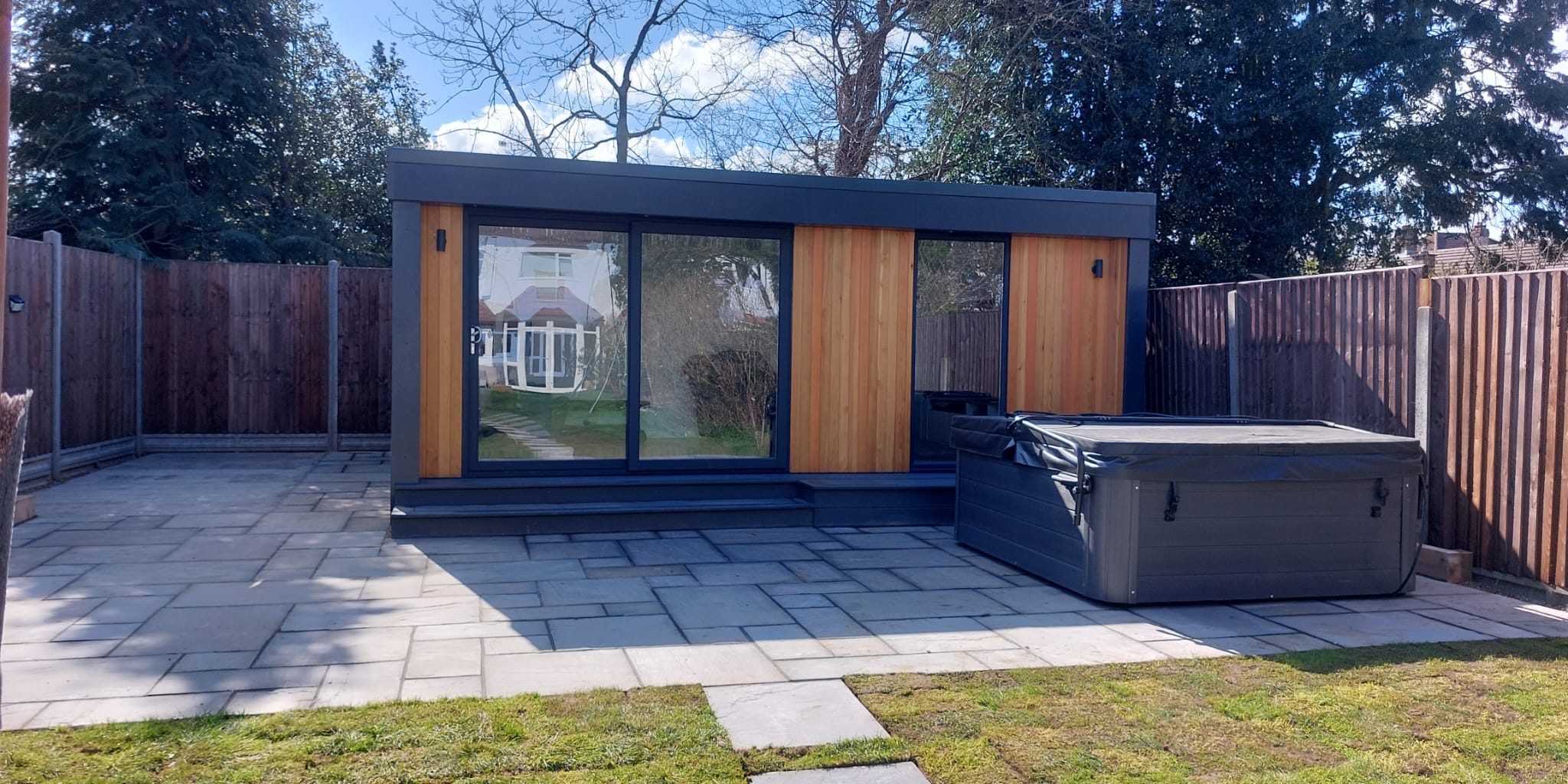
Adding a shower and toilet to a garden room is one of the most common requests we get. It makes sense. If you are working from home all day, running a therapy practice, or using your garden room as a studio, having to walk back to the house every time you need the loo is a genuine nuisance. In winter, it is enough to put some people off using the room altogether.
But a bathroom adds real cost to a garden room project. You are not just buying a toilet and a shower tray. You are paying for drainage, water supply, groundworks, electrical work, ventilation, and building regulations compliance. The good news is that it is all very doable, and we have fitted bathrooms into hundreds of garden rooms across South East London, Kent, Surrey, and Sussex since 2004. Here is what it actually costs and what is involved.
How Much Does a Garden Room with Shower and Toilet Cost?
A garden room with a shower and toilet in the UK typically costs between £25,000 and £50,000 all in. That includes the garden room itself, the plumbing, drainage connection, electrical work, fixtures, and building regulations sign off.
For context, a standard garden room without plumbing typically costs between £15,000 and £35,000 depending on size, specification, and insulation quality. Adding a shower and toilet to that will usually add between £7,000 and £15,000 on top, depending on how far the garden room sits from your house and what drainage solution is needed.
Here is a rough breakdown of where that additional cost goes.
Cost Breakdown: Adding a Bathroom to a Garden Room
| Item | Typical Cost Range |
|---|---|
| Drainage connection to mains sewer | £2,000 to £4,000 |
| Water supply connection (trenching and pipework) | £800 to £2,000 |
| Macerator pump (if gravity drainage is not possible) | £700 to £1,500 |
| Toilet (supply and fit) | £300 to £900 |
| Shower enclosure and tray (supply and fit) | £400 to £1,200 |
| Basin and vanity unit | £200 to £600 |
| Tiling or waterproof wall panels | £300 to £1,200 |
| Plumber (labour) | £1,000 to £3,000 |
| Electrician (extractor fan, lighting, heated towel rail) | £500 to £1,200 |
| Building regulations application and inspection | £300 to £600 |
The single biggest variable is drainage. If your garden room sits close to the house and can connect to the existing soil stack with a simple gravity fed run, costs stay at the lower end. If the garden room is 15 metres away at the bottom of a sloping garden, the groundworks and pipework costs climb quickly.
The Drainage Question: Your Biggest Cost Variable
Getting wastewater from a garden room toilet to the sewer is the part that catches most people out. It is not as simple as running a pipe. There are three main options, and the right one depends on your site.
1. Gravity Fed Drainage (Cheapest)
If your garden room is close to the house and the ground slopes towards the existing drainage, you can run a standard 110mm soil pipe from the garden room to the main soil stack or an inspection chamber. The pipe needs a fall of at least 1 in 40 (roughly 25mm per metre) to work properly.
This is the cheapest and most reliable option. The groundworks involve digging a trench at least 600mm deep across your garden, laying the pipe on a bed of pea gravel, and backfilling. For a run of 5 to 10 metres, expect to pay £2,000 to £3,500 for the drainage connection including labour and materials.
2. Macerator Pump System (Mid Range)
When gravity drainage is not practical, either because the ground is flat or the garden room is too far from the soil stack, a macerator pump is the usual solution. Brands like Saniflo are the most common. The pump grinds waste into a fine slurry and pushes it through a narrow bore pipe (22mm or 32mm) to the mains drainage. This means far less disruptive groundworks because the pipe is much smaller and does not need the same gradient.
A Saniflo unit costs between £400 and £1,000 for the pump itself, plus fitting. The total installed cost including the small bore pipework run is usually £1,500 to £3,000. The trade off is that macerators need electricity to run, they are slightly noisier than a standard flush, and they do need occasional maintenance and descaling. With proper care, a good unit lasts 8 to 10 years before replacement.
3. Pumping Station (For Longer Distances)
For garden rooms a long way from the house, or where the drainage needs to travel uphill, a small domestic pumping station may be needed. These sit in a buried chamber and pump waste to the sewer connection. Supply and installation typically costs £2,500 to £4,000. This is less common for standard garden rooms but sometimes necessary on larger or more complex sites.
Water Supply: What Is Involved
Getting clean water to the garden room is more straightforward than drainage, but it still needs doing properly. A qualified plumber will run hot and cold water pipes from your house to the garden room, typically through an underground trench alongside the drainage pipe. The pipes need to be buried at least 750mm deep to protect against frost.
Most garden room bathrooms connect to the house’s existing hot water system via an insulated pipe run. For longer distances, a small point of use water heater (£150 to £400) in the garden room itself avoids heat loss from long underground pipe runs. The total cost for water supply pipework and connection is usually £800 to £2,000.
Building Regulations: What You Must Comply With
This is the part many people do not realise until they are already planning the project. A standard garden room used as a home office or hobby room will often fall under permitted development and not require building regulations approval. Once you add a toilet, shower, and plumbing, the rules change.
You will need to comply with several parts of the Building Regulations.
- Part G (Sanitation, Hot Water, and Water Efficiency). Your bathroom must have an adequate water supply, proper hot water temperature controls, and handwashing facilities next to the toilet.
- Part H (Drainage and Waste Disposal). All drainage must be properly installed with the correct gradients, sealed joints, and rodding access at every change of direction. The pipework must connect to the public sewer, a private treatment system, or a septic tank.
- Part P (Electrical Safety). Any electrical work in a room with water, including extractor fans, lighting, heated towel rails, and macerator pump supplies, must be carried out by a qualified electrician registered with an approved scheme such as NICEIC or NAPIT.
- Part F (Ventilation). A bathroom with a toilet needs mechanical extraction of at least 6 litres per second. If a shower is present, that increases to 15 litres per second. An extractor fan vented to the outside is the standard solution.
You will also need a building control application, either through your local authority or an approved inspector. This typically costs £300 to £600 and involves one or two site inspections. For more detail on how this works, see our planning permission and building regulations guide.
Does a Toilet Mean You Need Planning Permission?
Not necessarily, but it depends on how the room will be used. Under permitted development rules, a garden room must be “incidental” to the enjoyment of the house. A home office with a convenience toilet still qualifies as incidental in most cases. However, if the room has a toilet, shower, and sleeping accommodation, your local authority may view it as a self contained dwelling rather than an outbuilding. That would take it outside permitted development and require a full planning application (currently £293 plus the cost of drawings).
The safe approach: if you are adding a bathroom but not a bedroom, you should be fine under permitted development. If you are building what is effectively a guest annex or granny flat, apply for planning permission from the start.
What Size Garden Room Do You Need?
A shower room with a toilet and basin takes up roughly 2 to 3 square metres of floor space. That means you need a garden room large enough to accommodate the bathroom and still have a usable main room.
As a practical guide:
- 3m x 4m (12 sqm). Enough for a small office or treatment room with a compact shower room. The bathroom will take up about a quarter of the floor area.
- 4m x 5m (20 sqm). A more comfortable layout. Room for a proper workspace or studio with a dedicated bathroom that does not feel cramped.
- 5m x 6m (30 sqm) or larger. Allows for a generous main room, a well sized bathroom, and potentially a small kitchenette as well.
We build garden rooms in all standard sizes and can design bespoke layouts around your exact requirements, including the bathroom position, partition walls, and plumbing routes.
Ways to Reduce the Cost
If the full cost of a plumbed in bathroom stretches your budget, there are a few practical ways to bring the price down.
- Position the garden room close to the house. Every metre of trenching adds cost. Keeping the garden room within 5 to 8 metres of the existing soil stack can save £1,000 to £2,000 on groundworks alone.
- Use a macerator instead of gravity drainage. If the ground is flat or the run is long, a Saniflo system avoids the need for deep trenching and large diameter pipework.
- Choose a compact bathroom layout. A corner shower, wall hung toilet, and small basin can fit into 1.5 square metres. You do not need a full sized bathroom.
- Pick mid range fixtures. A perfectly good toilet costs £200 to £400. You do not need to spend £900 on one. The same applies to shower enclosures, basins, and taps. Save the premium spend for things that affect comfort and longevity, like insulation and build quality.
- Install a point of use water heater. A small electric water heater in the garden room is cheaper than running insulated hot water pipes underground from the house, especially on longer runs.
What About a Toilet Only (No Shower)?
If you just want a toilet and basin without a shower, the costs drop significantly. You will still need drainage and water supply, but the bathroom itself is smaller and simpler. A toilet and basin fitted into a compact 1.2 square metre space with a macerator pump and basic finishes can add as little as £4,000 to £6,000 to the total project cost.
This is a popular option for garden offices where the main requirement is not having to go back to the house during the working day. A shower can always be added later if needed, provided the drainage and water supply have been sized to accommodate it.
Is It Worth Adding a Bathroom to a Garden Room?
In our experience, yes, for most people who use their garden room daily. The extra cost of £7,000 to £15,000 is significant, but it removes the single biggest inconvenience of working or spending long periods in a garden room. It also increases the property value and makes the space genuinely self sufficient for all day use.
Where it may not be worth it: if you only use the garden room occasionally at weekends, or if the room is just a few steps from your back door. In those cases, a standard garden room without plumbing may be all you need.
To see our full range and get accurate pricing for your project, visit our buildings and prices page.
Save £5,000 with Our Ambassador Programme
If you are planning a garden room with a bathroom, our Ambassador Programme can save you £5,000 on the total cost. In return, you allow us to photograph the completed build and host a small number of viewing visits for prospective customers. It is a straightforward arrangement that has helped hundreds of our customers get a better garden room for less. Get in touch to find out if your project qualifies.