

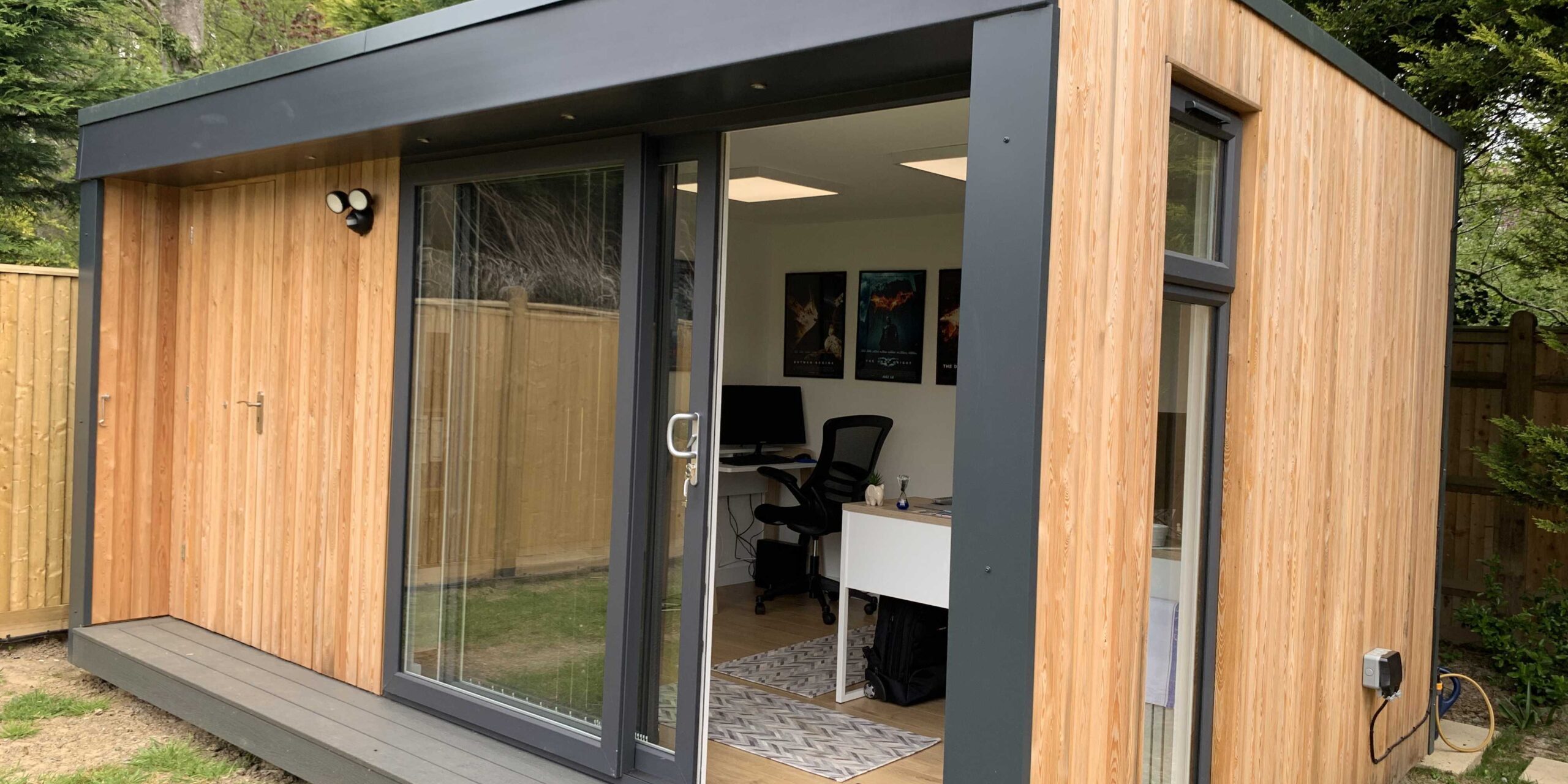
You have spent the money on a quality garden room. The shell is up, it is insulated, wired, and watertight. Now what? The interior is where your garden room becomes a space you actually want to spend time in, and getting it right does not have to mean hiring a designer or spending a fortune.
We have been building garden rooms across South East London, Kent, Surrey, and Sussex since 2004. Over more than 1,000 builds, we have seen every kind of interior, from minimalist home offices to cosy reading rooms packed with bookshelves. Here is what works, what does not, and how to make smart choices that suit your space and budget.
Start with How You Will Use the Room
This sounds obvious, but it is the most common mistake people make. They buy furniture and accessories before thinking about what the room needs to do day to day.
Most of our garden rooms are between 12 and 30 square metres. That is enough space to do one or two things well, but not everything. So before you choose a paint colour or buy a desk, write down your primary use and your secondary use.
If the room is mainly a home office but you also want it as a yoga space in the evenings, that shapes everything. You would want a desk that does not dominate the room, flooring that works barefoot, and storage that keeps work clutter out of sight. Get clear on the function first. The styling follows from there.
Colour Schemes That Work in Garden Rooms
Garden rooms behave differently from rooms inside your house. They tend to have more glazing, which means more natural light. They are surrounded by greenery, which affects how colours look through the day. And they are smaller, so colour choices have a bigger visual impact.
Light and Neutral Tones
For most garden rooms, especially smaller ones in the 12 to 18 square metre range, light neutrals are the safest starting point. Whites, off-whites, pale greys, and warm beiges make the space feel larger and let the garden views do the talking. A natural wood floor combined with white or pale walls works in almost any garden room and will not date.
Greens and Earth Tones
Sage green, olive, and muted greens are particularly effective in garden rooms because they echo the planting outside. A sage feature wall behind a desk creates a visual connection to the garden without being heavy handed. Pair it with natural textures like linen, jute, or untreated wood for a grounded, calming feel. Terracotta and warm sand tones also work well if you want the room to feel cosy rather than airy.
Matching Colour to Purpose
Colour affects mood and concentration. Cool blues and muted greens promote focus, which is why they suit home offices. Warm neutrals and soft pinks create a welcoming atmosphere for lounges or guest rooms. Brighter tones like mustard yellow or terracotta can energise a creative studio. Think about how you want to feel in the space, and let that guide your palette.
Flooring Options
Your garden room floor needs to handle foot traffic, cope with some moisture from the garden, and feel comfortable underfoot for hours at a time.
Luxury Vinyl Tile
LVT is the most popular choice across our builds. It is fully waterproof, hard wearing, and comes in convincing wood and stone effect finishes. It handles underfloor heating well, is easy to clean, and costs less than real wood. For a garden office or multi-use room, it is hard to beat on practicality.
Engineered Wood
If you want real wood warmth and character, engineered boards are the way to go. They are more stable than solid hardwood in a garden room environment where temperature and humidity fluctuate. Oak is the most common choice and ages beautifully.
Carpet and Cork
For a dedicated relaxation room, home cinema, or music room, carpet makes the space feel instantly warm and absorbs sound. Cork is an underrated option that is naturally warm underfoot with good sound absorption, working particularly well in yoga studios or therapy rooms.
Furniture That Fits
The biggest furniture mistake in garden rooms is buying pieces that are too large. A sofa that looks right in a showroom can swallow half your garden room. Always measure twice, and if in doubt, go smaller than you think.
For a home office, a desk between 120cm and 140cm wide is usually right for rooms up to about 15 square metres. Wall-mounted floating desks are a smart option if you need the floor space for other activities. In a dual-purpose room, a compact two-seater sofa or a pair of armchairs will usually fit better than a three-seater. A day bed is excellent if the room doubles as a guest room, serving as seating by day and a bed at night.
In a compact space, every piece should earn its place. Ottomans with internal storage, coffee tables with drawers, and fold-down wall tables all help you get more from less floor area.
Storage Solutions
Clutter kills a garden room faster than any other room in your home, because there is less floor area to absorb it.
Use your walls. Floor-to-ceiling shelving, wall-mounted cabinets, and floating shelves keep the floor clear. If your budget allows, built-in storage along one wall can house everything from files and printers to gym equipment, and when the doors are closed the room looks clean and tidy. We can incorporate built-in storage into your garden room design from the outset, which is easier and cheaper than retrofitting.
Lighting: Getting It Right
Garden rooms are blessed with natural light during the day. But the UK has short winter days, and you will need good artificial lighting for much of the year. The trick is layering different types of light.
Ambient lighting is your general, all-round light. Recessed LED downlights are the most popular choice because they do not take up headroom and give an even wash of light. Fit them with dimmer switches so you can dial the brightness up for work and down for relaxing.
Task lighting means a good desk lamp for offices or a floor lamp for reading corners. Look for an adjustable LED lamp with a high colour rendering index so colours look accurate.
Accent lighting adds personality. A pendant over a table, LED strips under shelves, or a couple of table lamps create warmth and visual interest in the evening.
Smart bulbs are worth considering. Being able to switch from cool daylight (5000K for focused work) to warm white (2700K for relaxing) is genuinely useful in a room that changes function through the day.
Bringing the Outside In
Position your main seating or desk to face the windows so you have a view of greenery. It is good for your mood, reduces screen fatigue, and makes the room feel connected to its setting.
Indoor plants work brilliantly in garden rooms because the natural light suits most houseplants. A snake plant on a shelf, trailing pothos on a high surface, or a fiddle leaf fig in a corner all soften the space. You do not need a jungle. Three or four plants placed thoughtfully make more impact than a dozen crammed onto every surface. Natural materials help too: a jute rug, linen blinds, wooden shelving, and ceramic pots all bring texture without competing with the garden view.
Interior Ideas by Room Type
Home Office
Cool neutral walls, LVT or engineered wood flooring, a properly sized desk facing the window, an ergonomic chair, wall-mounted shelving, and a good desk lamp. Keep it clean and uncluttered. Our Midi range is popular for dedicated home offices.
Garden Lounge
Warm neutral or sage green walls, a compact sofa and armchairs, a coffee table with storage, a rug to anchor the seating, and layered lighting with dimmers.
Gym or Yoga Studio
Light, bright walls, cork or rubber flooring, wall-mounted mirrors, hooks for resistance bands and mats, and good ventilation. Keep furniture to a minimum for maximum floor space.
Guest Room
Warm wall colours, a day bed or sofa bed, a small bedside table with a lamp, blackout blinds, and a few thoughtful touches like a tray with a kettle and cups. Our Maxi range gives you enough space for a comfortable guest setup.
What to Spend and Where to Save
Worth spending on: Your chair (if it is an office), your flooring, and your lighting. These affect how the room looks and feels every single day.
Fine to save on: Decorative accessories, storage baskets, cushions, throws, and wall art. These are easy to swap out over time.
A realistic budget for furnishing a garden room interior is between £1,000 and £5,000, depending on size and use.
Getting Started
If you are planning a new garden room, thinking about the interior from the start is the ideal approach. We can help with layout advice, electrical positioning for your planned furniture, and built-in storage options as part of the build. Have a look at our buildings and prices to see the sizes and specifications we offer, or get in touch to talk through your ideas.
Save £5,000 with Our Ambassador Programme
If you would like to save money on your garden room, ask us about our Ambassador Programme. Ambassadors allow us to use their completed build for photography and a small number of viewing visits. In return, they save £5,000 off the price. It is a straightforward arrangement that works well for both sides.