

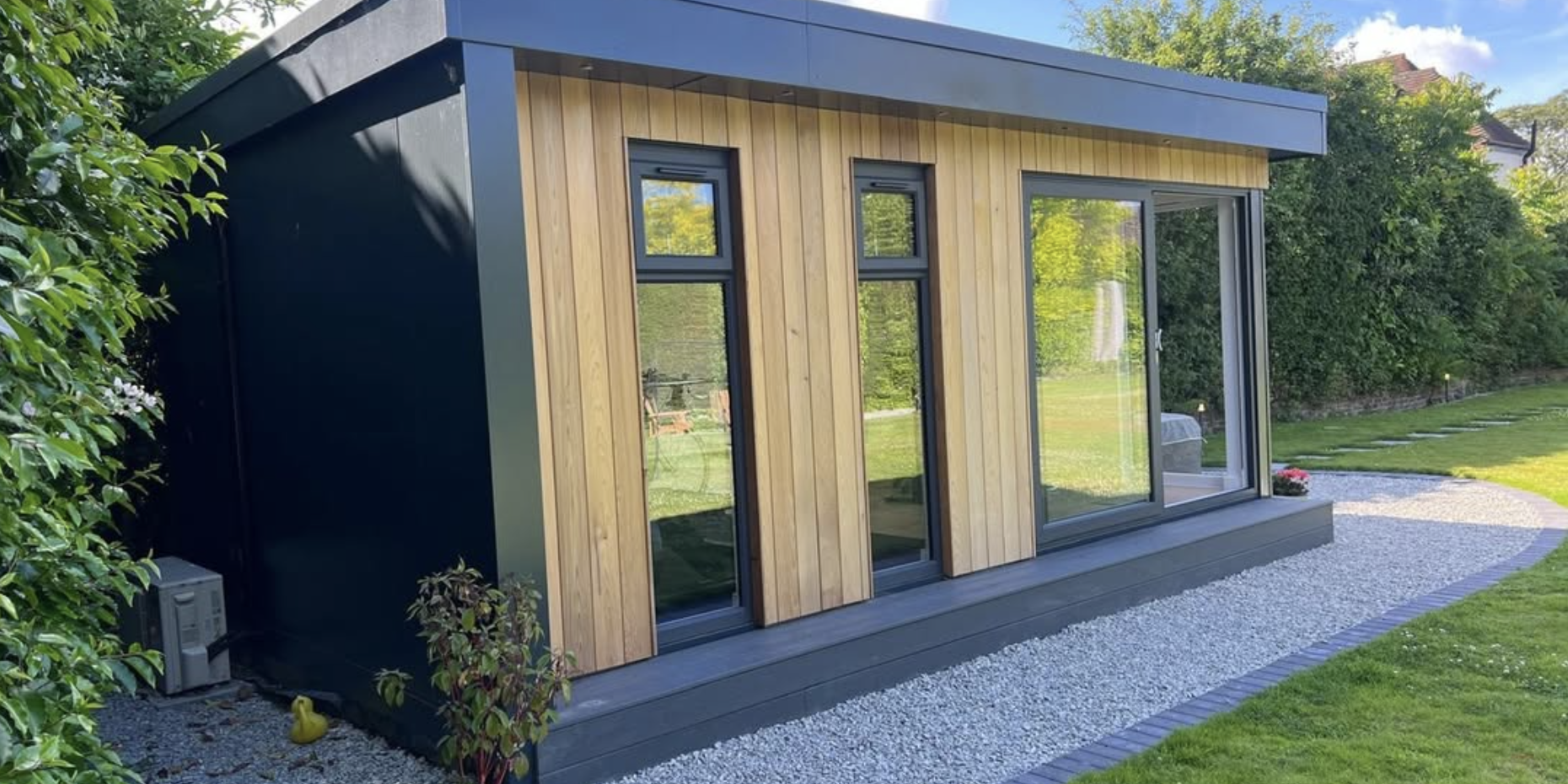
Whether you want a home office, a gym, a playroom for the kids, or simply more living space, a garden room is one of the most practical ways to get it. But before you start choosing colours and furniture, there is a bigger question to answer first: should your garden room be attached to the house, or standalone?
Both options have their place. We have built over 1,000 garden rooms across South East London, Kent, Surrey, and Sussex since 2004, and we have seen both approaches work well in the right circumstances. This guide covers the main garden room extension ideas for both attached and standalone builds, the planning differences you need to know about, and how to decide which route suits your property.
Attached vs Standalone: The Planning Difference
This is the single most important distinction, and it affects cost, build time, and what you are allowed to do without applying for planning permission.
A standalone garden room sits separately in the garden. It is classed as an outbuilding under planning law, which means it usually falls within your permitted development rights. As long as it meets certain rules on size, height, and position, you can build one without submitting a planning application. You can read more about those rules on our planning permission and building regulations page.
An attached garden room is a different matter. The moment a garden room is physically joined to your house, it is no longer an outbuilding. It is classified as an extension. That means it is subject to planning permission and full building regulations approval, including structural calculations, foundation inspections, and compliance with Part L (energy efficiency) and Part P (electrics).
The key permitted development rules for standalone garden rooms are worth knowing:
- Single storey only, with a maximum eaves height of 2.5 metres.
- Overall height no more than 4 metres with a dual-pitched roof, or 3 metres for any other roof type.
- If within 2 metres of a boundary, the maximum overall height is 2.5 metres.
- Cannot be built forward of the principal elevation (front of the house).
- All outbuildings combined must not cover more than 50% of the garden area.
- Different rules apply in conservation areas, Areas of Outstanding Natural Beauty, National Parks, and for listed buildings.
For most homeowners, a standalone garden room avoids the planning process entirely, which saves weeks of waiting, application fees, and the risk of refusal. That said, if your heart is set on an attached build, or your garden layout makes it the only sensible option, the planning route is perfectly manageable with the right guidance.
Standalone Garden Room Ideas
A standalone garden room gives you a separate space in the garden, away from the noise and activity of the main house. That separation is one of its biggest strengths, particularly for uses where you need quiet or concentration.
Garden Office
This remains the most popular use by a long way. With hybrid and remote working now permanent for millions of people, a dedicated garden office is a genuine selling point for any home. The physical separation from the house helps you draw a clear line between work and home life. You walk to the office in the morning and walk home at the end of the day. People consistently tell us it makes a real difference to their productivity.
A good garden office needs full insulation, proper electrics, data cabling, good natural light, and ventilation to stay comfortable year round.
Home Gym
A garden gym lets you work out whenever you want without the commute or the monthly membership fees. The standalone location means heavy weights and treadmills are not shaking the floors of your main house, and you can play music at whatever volume you like.
If you are planning a gym, talk to your builder about floor loading. Reinforced flooring and proper ventilation are worth getting right from the start.
Playroom or Family Room
For families with younger children, a standalone garden room makes a brilliant playroom. The kids get their own dedicated space to play, and the toys, mess, and noise stay out of your main living areas. As the children grow up, the room easily adapts into a teenage den, a music practice room, or a study space for exams.
Creative Studio
Artists, musicians, photographers, and craft enthusiasts all benefit from a space where they can leave projects out without tidying up every evening. The quiet and separation from household distractions make it easier to focus. You can fit out the interior for your craft, with storage, worktops, specialist lighting, or soundproofing as needed.
Garden Bar or Entertainment Room
A garden room set up as a bar, games room, or cinema room gives you a proper space for entertaining without turning your living room upside down. Bi-fold doors that open onto the garden let you host parties that flow between indoors and outdoors during summer. Add a projector, a dart board, or a pool table, and you have a space that gets used far more than you might expect.
Therapy or Treatment Room
If you run a therapy practice, beauty treatments, or any client-facing business from home, a standalone garden room offers a professional setting without clients walking through your house. It has its own entrance and gives both you and your clients the right level of privacy.
Garden Room Ideas Attached to House
An attached garden room works as a direct extension of your home, giving you extra living space that connects straight to the existing house. The main advantage is convenience. You do not need to walk across the garden to use the room, which matters more than you might think during cold or wet weather.
Kitchen and Dining Extension
One of the most popular attached garden room ideas is extending the kitchen. A glazed garden room added to the back of the house can open up a kitchen into a bright, spacious kitchen-diner with views of the garden. Bi-fold or sliding doors blur the line between inside and outside, making the whole ground floor feel larger. This approach works particularly well on Victorian and Edwardian terraced houses where the original kitchen is narrow and dark.
Bear in mind that a kitchen extension needs building regulations approval for drainage, ventilation, electrics, and structural work. You will also want to think about extraction for cooking smells, as an open-plan layout means odours travel.
Open-Plan Living Room Extension
If your living room feels cramped, an attached garden room can add a second sitting area, a reading nook, or a bright family space that flows directly from the existing room. Large glazed panels and roof lanterns bring natural light deep into the house. This is especially effective on north-facing properties where the back rooms tend to be dark.
Garden Room with a Covered Link
If you want some of the benefits of both approaches, consider a standalone garden room connected to the house by a covered walkway or glazed corridor. This gives you the physical separation and easier planning of a standalone build, while still allowing you to walk between the house and the garden room without getting wet. Glass link corridors in particular look striking and can add a real sense of design to the garden.
There is a planning nuance here, though. A covered link may or may not count as “attaching” the garden room to the house, depending on how it is constructed. A fully enclosed, weathertight corridor is likely to be treated as an extension. An open-sided covered walkway is less clear-cut. Check with your local planning authority before committing to this approach.
Lean-To Garden Room
A lean-to is one of the simplest attached garden room styles. It sits against an existing wall with a single-slope roof that angles down from the house. Lean-to structures tend to be more affordable than fully independent extensions because they use the existing house wall as one side of the build. They work well for smaller spaces and narrower gardens where a full standalone room would eat up too much lawn.
Orangery-Style Garden Room
An orangery sits somewhere between a conservatory and a traditional extension, with brick or rendered pillars, large glazed panels, a flat roof, and a central roof lantern. The result is a room that feels lighter than a standard extension but warmer than a conservatory. Orangeries work well as dining rooms, sitting rooms, or multi-use family spaces.
Pros and Cons at a Glance
Standalone Garden Rooms
Advantages:
- Usually no planning permission needed under permitted development.
- Faster to build, often completed in one to two weeks.
- Lower cost than an equivalent attached extension.
- Provides genuine separation from the house, which suits offices, studios, and treatment rooms.
- Less disruption to your household during the build.
- Can be positioned anywhere in the garden (subject to rules).
Disadvantages:
- You need to walk outside to reach it, which is less convenient in poor weather.
- Needs its own heating system (not connected to the house boiler).
- Requires separate electrical supply run from the house.
- May add slightly less property value than an attached extension of the same size.
Attached Garden Rooms
Advantages:
- Direct access from the house with no need to go outside.
- Can share heating with the main house.
- Feels like a natural part of the home, which appeals to buyers.
- Good for kitchen, dining, and living room extensions where you want open-plan flow.
Disadvantages:
- Classified as an extension, so planning permission and building regulations apply.
- Longer build time, often several months rather than weeks.
- Higher cost due to foundations, structural work, and regulatory compliance.
- More disruption during construction, with builders needing access through the house.
- Less flexibility in positioning, as it must adjoin the existing building.
Which Approach Adds More Value?
Both options can add value to your property. Estate agents generally estimate a quality garden room adds between 5% and 15% to a home’s value, depending on specification and how well it suits the property.
An attached extension may add slightly more because it increases the measured floor area of the house, which is what valuers focus on. But the cost is also significantly higher. When you compare return on investment, a standalone garden room often comes out ahead.
The most important factor is build quality. A well-insulated, properly finished garden room adds genuine value regardless of whether it is attached or standalone. A cheap, poorly built structure does not. You can see our specification on our buildings and prices page.
Design Tips That Apply to Both
- Get the proportions right. Leave at least half the garden as usable outdoor area. A building that dominates the lawn puts buyers off.
- Match the style of the house. A garden room that complements the main property looks considered. One that clashes looks like an afterthought.
- Maximise natural light. Large glazed doors, skylights, and roof lanterns all help make the room feel spacious and pleasant.
- Insulate properly. Full insulation in walls, floor, and roof is what separates a year-round garden room from a summer house.
- Plan your electrics early. It is much easier and cheaper to get sockets, lighting, and data points right during the build than to retrofit later.
- Think about the view from the house. Make sure it looks good from the kitchen or living room window, not just from the inside.
How to Decide
The right choice depends on what you need the room for, your budget, and the layout of your property. As a general rule:
Choose standalone if you want a home office, gym, studio, or any use where separation from the house is a benefit. Also choose standalone if you want to avoid planning permission, keep costs lower, or get the build done quickly.
Choose attached if you want to extend your kitchen, dining room, or living room, or if you need a space that feels like part of the house rather than a separate building. Be prepared for a longer project, higher costs, and the planning process.
If you are not sure which route is best for your property, we are happy to visit, look at your garden, and give you an honest recommendation. We have been doing this since 2004 and we have seen just about every garden shape, size, and challenge you can imagine. Have a look at our bespoke garden rooms to see the range of what is possible, or get in touch to arrange a visit.
Save £5,000 with Our Ambassador Programme
If you would like to save money on your garden room, ask us about our Ambassador Programme. Ambassadors allow us to use their completed build for photography and a small number of viewing visits from prospective customers. In return, they save £5,000 off the price. It is a straightforward arrangement that works well for both sides, and it is open to both attached and standalone builds.