

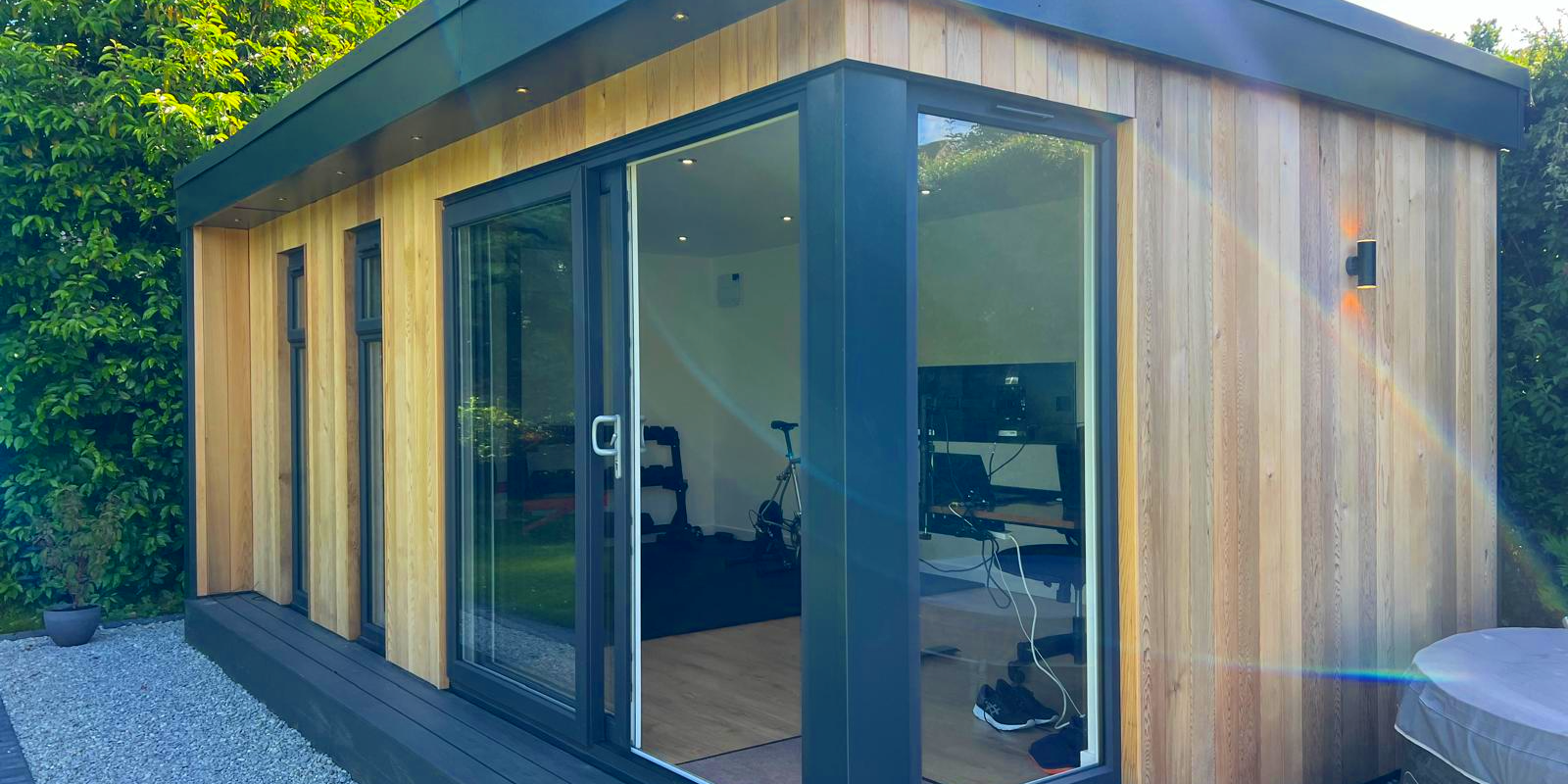
The cladding you choose for your garden room sets the tone for the whole building. It is the first thing you see and the main line of defence against the weather. Get it right and your garden room will look good and perform well for decades. Get it wrong and you could be looking at regular maintenance, fading finishes, or costly repairs.
We have been building garden rooms across South East London, Kent, Surrey, and Sussex since 2004. Over more than 1,000 builds, we have worked with every type of garden room cladding on the market. This guide covers the main options, their strengths and weaknesses, the colours available, and what we recommend based on real-world experience in the South East.
Western Red Cedar
Cedar remains the most popular cladding choice for garden rooms in the UK, and for good reason. Western red cedar has a naturally warm, reddish-brown colour with attractive grain patterns. It contains natural oils that make it resistant to moisture, rot, insect damage, and fungal attack without any chemical treatment.
A well-installed cedar cladding system will last 25 years or more, even without treatment. Left untreated, cedar gradually weathers to an even silvery-grey patina. Many of our clients actually prefer this weathered look, as it gives the building a settled, natural appearance that sits comfortably in a garden setting.
If you prefer to keep the original warm tones, you will need to apply a UV-protective oil every three to four years. This is a straightforward job that most homeowners can do themselves over a weekend. The oil slows down the natural greying process and helps the timber repel water more effectively.
Pros
- Beautiful natural appearance with rich colour and grain
- Naturally resistant to rot, moisture, and insects
- Excellent dimensional stability with minimal warping or shrinkage
- Long lifespan of 25 years or more
- Can be left to weather naturally or oiled to maintain colour
Cons
- More expensive than other timber species
- Requires oiling every three to four years if you want to maintain the original colour
- Sourced from Canada, so supply costs can fluctuate
Best for
Clients who want a classic, warm timber finish and are happy with either the natural silvering process or occasional oiling. Cedar works particularly well in established gardens where a natural look suits the surroundings.
Siberian Larch
Larch is a strong, resilient softwood with natural resins that provide good resistance to decay. It is widely grown in the UK and Europe, which makes it more affordable than cedar while still offering an attractive timber finish. Siberian larch has a lighter, more golden tone than cedar, with visible knots that give it a characterful appearance.
Like cedar, larch will silver over time if left untreated. It can be stained or oiled to maintain its original colour, though this requires the same three to four year maintenance cycle.
Pros
- More affordable than cedar, often 30% to 40% less expensive
- Good natural durability and decay resistance
- Attractive grain with natural character
- Readily available from UK and European suppliers
Cons
- Slightly less durable than cedar over the long term
- Same maintenance requirements as cedar if you want to preserve the colour
- Can be more prone to movement and splitting than cedar
Best for
Clients who love the look of natural timber but want to keep material costs down. Larch is a solid, honest choice that performs well in the South East climate.
Composite Cladding
Composite cladding is made from a mixture of recycled wood fibres and resins, creating a material that looks like timber but requires almost no maintenance. This is the garden room cladding option that has grown fastest in popularity over the last few years, and it is easy to see why.
A composite cladding garden room will not rot, warp, crack, or split. The colour is added during manufacturing, so it does not fade the way timber does and never needs painting or staining. All you need to do is wash it down once or twice a year to keep it looking fresh. High-quality composite cladding can last 25 to 40 years with minimal upkeep.
Composite boards are available in both horizontal and vertical orientations. Vertical cladding gives a more contemporary, sleek appearance and creates an impression of height. Horizontal boards have a more traditional feel and can make a building appear wider. Both options are available with either a smooth finish or a woodgrain texture.
Colours
This is where composite really stands out for garden room cladding ideas. The range of colours is much wider than natural timber can offer. Popular choices include slate grey, storm grey, anthracite, sage green, taupe, oyster white, and atlas brown. Greys are by far the most requested colours we see, particularly anthracite and slate grey, which suit modern garden designs and complement contemporary house extensions.
Pros
- Virtually maintenance-free after installation
- Will not rot, warp, crack, or split
- Wide range of colours and finishes
- Retains its colour for decades without painting or staining
- Made from recycled materials
- Good resistance to UV, frost, and moisture
Cons
- Higher upfront cost than natural timber
- Cannot be repainted or stained to a different colour later
- Repairs can be more difficult, sometimes requiring replacement of whole sections
- Lacks the natural variation and depth of real timber grain
Best for
Clients who want a clean, modern look with absolutely minimal maintenance. If you do not want to think about your cladding after the build is finished, composite is the right choice. Take a look at some examples on our buildings and prices page.
Fibre Cement Cladding
Fibre cement boards are made from a mixture of cement and cellulose fibres, creating a rigid, dimensionally stable cladding material. The main UK brands are Marley (including the Cedral range) and James Hardie (HardiePlank). These boards are widely used on houses as well as garden buildings.
Cedral boards are available in over 20 colours with a choice of smooth or woodgrain finishes. Marley Weatherboard comes in five popular colours including white, light grey, blue grey, slate grey, and black. The colour is integrated during production, so there is no need for repainting.
Fibre cement cladding has excellent fire-resistance properties, which is worth considering if your garden room is close to a boundary. It is also completely resistant to rot, mould, and pests.
Pros
- Very long lasting with excellent weather resistance
- Fire-rated material, good for buildings near boundaries
- Wide colour range, particularly with Cedral boards
- No repainting required
- Dimensionally stable with no warping or movement
Cons
- Slightly more expensive than wood-plastic composite
- Heavier than timber or composite, which can affect installation
- Can look less natural than real timber
Best for
Clients who want a very durable, low-maintenance finish with a wide choice of colours. Fibre cement is a particularly good option for garden rooms near boundaries where fire ratings matter.
Charred Timber (Yakisugi)
Charred timber cladding, known as yakisugi in Japan where the technique originated, has become a genuine trend in UK garden room design. The process involves carefully charring the surface of the timber, creating a deep black finish that repels water naturally and resists pests and decay. The result is a bold, architectural look that requires very little maintenance.
Charred larch is the most common option in the UK, and it works particularly well on garden rooms with large glazed panels where the dark cladding creates a strong contrast against the glass. It is more expensive than standard timber and suits clients who want to make a real design statement.
Render Board Cladding
For clients who want their garden room to match a rendered house, render board cladding is worth considering. A render system such as silicone render or K-Rend is applied over a cement-based board, creating a smooth, clean facade available in hundreds of colours. This finish gives a garden room a permanent, architectural quality, particularly when the colour and texture match the main property. Modern silicone renders are low maintenance, though they can crack if not properly applied.
Mixing Cladding Materials
One of the best garden room cladding ideas we see is combining two materials on the same building. This is both a design choice and a practical one. You might use cedar on the front elevation where it will be seen and enjoyed, and composite or fibre cement on the side and rear walls that face a boundary. This keeps the overall cost down while giving you the best appearance where it matters most.
Other popular combinations include render with timber accents, composite with a charred timber feature panel, or fibre cement in contrasting colours on different elevations. If you are interested in a mixed-material approach, our bespoke garden rooms page shows what is possible.
How to Choose the Right Cladding Colour
Colour choice is personal, but a few principles are worth keeping in mind. A garden room that complements the main property looks intentional. If your house is traditional red brick, warm timber tones or a soft grey work well. If your house has a modern rendered finish, a darker cladding creates an attractive contrast.
Think about the garden setting too. Natural timber tones sit comfortably among planting. Darker colours like anthracite can look dramatic but may feel dominant in a small garden, while lighter shades help a building feel less imposing.
Grey is the most requested cladding colour across our builds. It is neutral, works with almost any house style, and ages well. Darker anthracite shades suit contemporary properties, while lighter silver-greys work with more traditional homes. Remember to consider your window frames and fascia boards as well. Anthracite grey aluminium frames with matching dark cladding is a very popular combination.
Cost Comparison
Cladding costs vary depending on the profile, grade, and supplier, but here is a rough guide to help with budgeting. These are material costs per square metre, excluding installation.
- Siberian larch: £12 to £55 per square metre depending on grade
- Western red cedar: £18 to £70 per square metre depending on profile
- Thermally modified timber: £30 to £50 per square metre
- Composite (wood-plastic): £40 to £70 per square metre
- Fibre cement (Cedral or similar): £45 to £80 per square metre
- Charred timber: £50 to £90 per square metre
Keep in mind that the cheapest material upfront is not always the cheapest over the lifetime of the building. Cedar and larch need periodic oiling if you want to maintain the colour. Composite and fibre cement need almost nothing. Over 20 years, the total cost of ownership for a low-maintenance cladding can work out similar to, or even less than, a cheaper timber that needs regular attention.
For a full breakdown of garden room pricing including cladding options, visit our buildings and prices page.
Our Recommendation
There is no single best cladding for every garden room. The right choice depends on your budget, your taste, how much maintenance you are willing to do, and how you want the building to sit within your garden and alongside your house.
What we will say is this: after more than 1,000 builds, we know that the cladding choice matters less than the quality of the installation behind it. A well-built structural frame, proper insulation, good ventilation, and correct detailing around windows and doors will keep any cladding performing well for decades. A poor installation will cause problems regardless of how expensive the material is.
If you are weighing up your options and want honest advice based on experience rather than a sales pitch, get in touch with us. We will look at your garden, talk through what would work with your house, and give you a clear picture of the costs and trade-offs for each option.
Save £5,000 with Our Ambassador Programme
If you would like to save money on your garden room, ask us about our Ambassador Programme. Ambassadors allow us to use their completed build for photography and a small number of viewing visits. In return, they save £5,000 off the price. It is a straightforward arrangement that works well for both sides.