

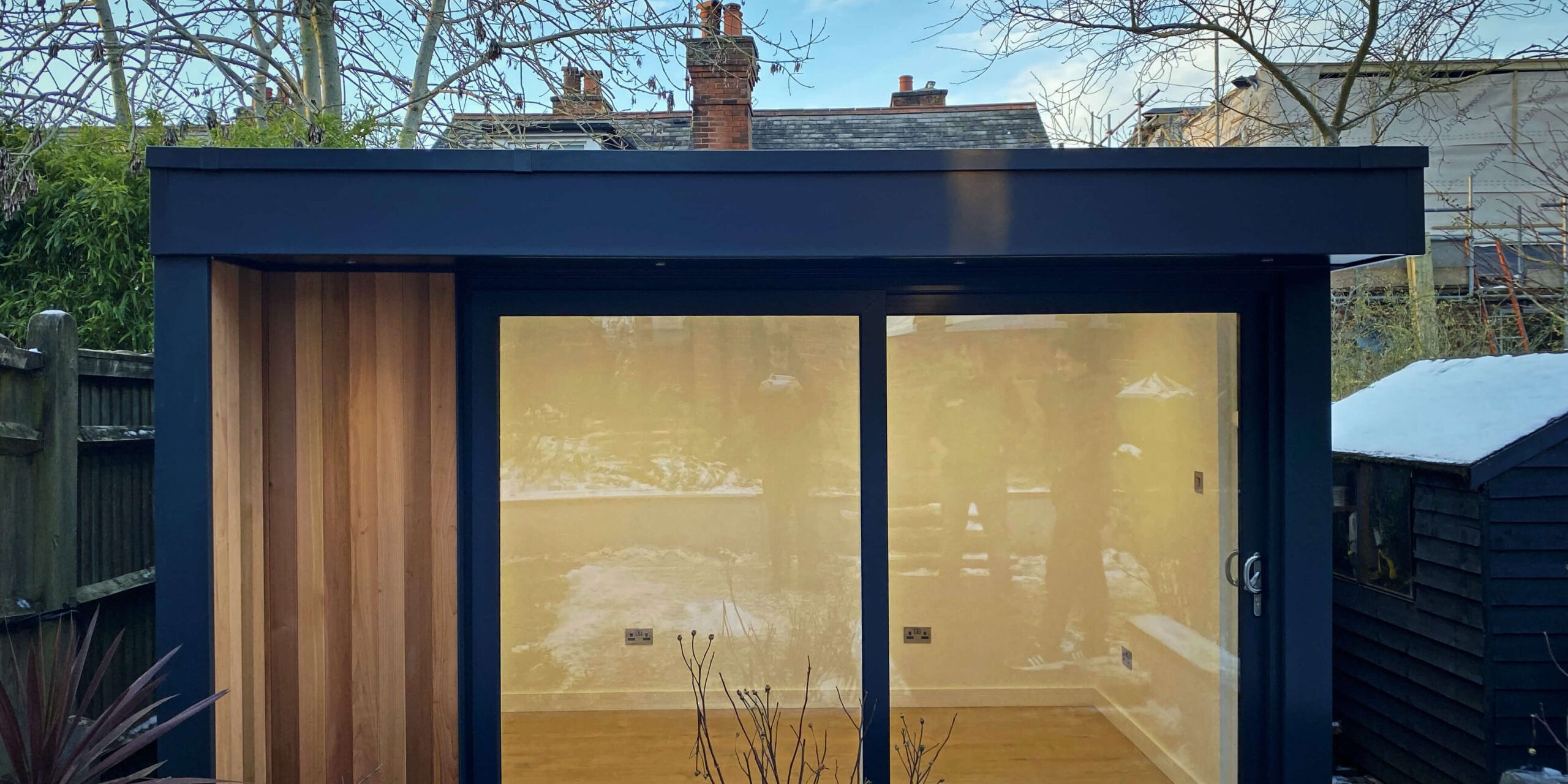
A modern garden room is defined by a handful of clear principles: clean lines, generous glazing, a flat or low-pitch roof, and materials that sit comfortably in a garden setting without screaming for attention. Get those right and you have a building that looks good, works all year round, and still feels like it belongs in your outdoor space.
We have been building garden rooms across South East London, Kent, Surrey, and Sussex since 2004. Over more than 1,000 builds, the shift towards contemporary garden room design has been impossible to miss. Ten years ago, most customers wanted something that looked like a traditional summer house. Today, the vast majority want something that feels more architectural. Cleaner. More considered. Here is what actually makes a modern garden room work, based on what we see on site every week.
What Makes a Garden Room “Modern”?
The word gets used loosely, so it is worth being specific. A modern garden room typically has four defining features.
A Flat or Low-Pitch Roof
The single biggest visual difference between a contemporary garden room and a traditional one is the roofline. Modern buildings use a flat roof or a very slight pitch, usually hidden behind a parapet wall so that from the outside you see clean, horizontal lines with no visible slope or guttering. This is not just about looks. A parapet roof with concealed drainage keeps the profile low and tidy, and it means the building can sit comfortably under the 2.5-metre height limit for permitted development without wasting headroom on a ridge.
The practical side matters too. A well-detailed flat roof uses EPDM rubber membrane, which has a lifespan of 50 years or more. It does not crack, bubble, or peel the way cheaper felt roofing does. When the gutters are hidden within the parapet, there is nothing hanging off the edges of the building to collect leaves or break away in a storm.
Full-Width Glazing
Large glazed panels across the full front elevation are the hallmark of contemporary garden room design. The goal is simple: bring as much natural light in as possible and blur the boundary between inside and out. Floor-to-ceiling glass with slim aluminium frames gives a clean, architectural look that a traditional window-and-door arrangement simply cannot match.
This is not about maximising glass for the sake of it. The glazing needs to work with the orientation of your garden. South-facing rooms may need solar control glass to prevent overheating in summer. North-facing rooms benefit from larger panels because every bit of light counts. We design the glazing layout around your specific garden, not from a standard template.
Minimal, Low-Maintenance Cladding
Modern garden rooms tend to use materials with a restrained colour palette and clean surface. The days of honey-coloured shiplap are fading. Today, the most popular finishes are composite cladding in soft greys and charcoals, vertical fibre cement boards, and timber-effect panels that look natural but require no annual treatment.
The trend in 2025 and 2026 is firmly towards finishes that look high quality without committing you to regular sanding, staining, or repainting. Vertical boarding (as opposed to horizontal) gives a taller, more refined appearance. Dark anthracite and slate grey remain the most requested colours, though softer tones like warm stone and muted green are gaining ground.
Concealed Detailing
What you do not see on a modern garden room matters as much as what you do. Hidden gutters, concealed fixings, recessed drainage, and flush-mounted lighting all contribute to the clean, uncluttered look. Traditional garden buildings often have visible screws, exposed rafter tails, and bolt-on guttering. A contemporary garden room hides all of that. The result is a building that looks simple, but is actually more carefully detailed than a traditional one.
Modern Glazing Options That Make the Difference
Glazing is where a contemporary garden room really earns its keep. The right doors and windows change how the space feels and how it connects to your garden.
Bifold Doors
Full-width bifold doors remain the most popular choice for modern garden rooms. A good set of bifolds folds completely to one side, opening up the entire front wall of the building. In summer, this turns your garden room into a covered outdoor area. In winter, with the doors closed, you still get an uninterrupted wall of glass.
For most garden rooms between 3 and 5 metres wide, a three or four-panel aluminium bifold set works well. The frames are slim enough to maximise the glass area, strong enough to support double or triple glazing, and durable enough to handle daily use for decades. We use aluminium rather than uPVC because the frame profiles are narrower, which keeps the look clean and lets more light through.
Sliding Doors
Large-format sliding doors are increasingly popular as an alternative to bifolds. A sliding system does not need the same clearance space when open, which suits rooms with furniture or decking close to the front. High-end sliding panels on flush tracks give a very clean look and glide with minimal effort.
Corner Glazing
Corner glazing wraps glass around the edge of the building so that two walls are transparent. This works particularly well on garden rooms positioned at an angle to the house, where you want views in two directions. It requires a cantilevered roof detail at the corner, but the visual impact is significant.
Fixed Panels and Side Windows
Not every pane of glass needs to open. Combining opening bifolds at the front with fixed glazed panels on the sides gives you light from multiple angles without adding unnecessary cost. Side windows also help with zoning, bringing light to the back of the room where your desk might sit while the bifolds connect the front to the garden.
The Luxury Garden Room: What Sets It Apart
A luxury garden room takes the same clean, modern principles and applies higher-specification materials and finishes throughout. The structure is the same. The attention to detail is greater.
Premium Cladding
At the luxury end, cladding options move beyond standard composite. Charred larch (Shou Sugi Ban) is increasingly requested for its bold, textured appearance and natural durability. Metal cladding in deep copper or textured black gives an industrial, architectural feel. Stone-effect panels, including split-faced tiles and Corten steel details, are appearing on high-end builds where the budget allows. These materials are not just about looks. They are chosen because they weather well, require minimal upkeep, and develop character over time.
Interior Finishes
Inside a luxury garden room, you will typically find fully plastered and painted walls rather than standard timber lining. Feature walls in oak panelling or a bold accent colour add warmth without clutter. Recessed LED lighting, including halo ceiling lights and under-counter strips, creates atmosphere without visible fittings. Some of our clients have specified built-in cabinetry, concealed heating panels, and even rising TV units for entertainment spaces.
Smart Technology and Climate Control
App-controlled heating, lighting, and blinds are becoming standard requests on higher-budget builds. A smart thermostat that learns your schedule and only heats the room when needed will pay for itself within a few years. Beyond that, a luxury garden room is comfortable in every season: proper insulation in walls, floor, and roof, double or triple glazed doors, underfloor heating or a wall-mounted heater for winter, and air conditioning for summer. A well-insulated room with a wall U-value below 0.2 stays warm in January and cool in July with very modest running costs.
Colour Palettes for Modern Garden Rooms
The colour choices that work best on contemporary garden rooms in 2025 and 2026 reflect a broader move towards restrained, natural tones.
The Greys
Anthracite (RAL 7016) remains the single most popular colour for modern garden room frames and cladding. It reads as almost black in certain lights but has enough warmth to avoid looking stark. Slate grey and soft charcoal are close behind. These darker tones work well because they recede visually, making the building feel less imposing in a garden setting.
Warm Neutrals
Softer palettes are gaining popularity, particularly for clients who want the building to feel more natural and less industrial. Warm stone, muted sage green, and antique oak tones all sit comfortably in a planted garden. These colours work especially well with vertical timber-effect cladding.
Two-Tone and Accent Approaches
A growing number of our builds use a two-tone approach: darker cladding on the main body with a contrasting lighter fascia or frame colour. Mixing materials gives a similar effect. Composite cladding in charcoal with timber-look panels around the door area adds depth without making the building look busy. For 2026, accent colours are shifting towards dusky pinks, soft rusts, and wine-red tones, used sparingly on a front door or feature panel to add personality against grey or dark green backgrounds.
Modern Design Ideas for Different Uses
The beauty of a clean, modern design is that it works across almost every use case. The structure stays consistent. The interior layout and fittings change to suit the purpose.
Garden Office
A modern garden office needs good natural light from multiple directions, enough wall space for a desk and storage, and proper data and power connections. Side windows paired with front bifolds give excellent light distribution. Cat6 cabling, multiple double sockets, and a dedicated consumer unit make the space genuinely functional as a daily workplace. Our buildings and prices page shows the specification we include as standard on every office build.
Multi-Use Space
The most popular request we get is for a room that does more than one job. An office during the week, a gym or yoga space in the evenings, a place to host friends at weekends. Modern design supports this because the clean, open layout does not lock you into a single arrangement. Underfloor heating keeps the floor clear for exercise. Bifold doors open the space up for entertaining. Good built-in storage hides office equipment when the room changes role. Take a look at our multi-use garden rooms to see how we approach flexible spaces.
Entertainment, Leisure, and Annexes
Garden bars, cinema rooms, and music rooms all suit the modern design language. The exterior stays clean and consistent while the interior is tailored to the activity, often with darker finishes, acoustic treatment, and integrated AV. For self-contained annexes with a kitchen, shower room, and sleeping area, the open feel of full-width glazing makes even a compact footprint feel spacious.
Getting the Design Right for Your Garden
A modern garden room should look like it was always meant to be there. That means thinking carefully about a few things before you finalise the design.
Orientation. Where the sun falls through the day affects which walls should have the most glass. A south-facing frontage gives maximum light but may need solar control. An east-facing room catches morning sun, which suits early workers. We assess your garden’s orientation during our first visit.
Proportion. The building should complement the garden, not overwhelm it. A room that fills half the available lawn will feel imposing no matter how beautiful the design. Leaving generous space around the building, ideally with planting to soften the edges, makes the whole garden feel better designed.
Sight lines from the house. Your garden room will be visible from the house every day. The view from your kitchen or living room window matters. Getting the placement right so the building frames the garden view rather than blocking it is one of those details that makes a real difference to daily life.
Access and landscaping. A proper path from the house, outdoor lighting along the route, and considered planting around the building all contribute to the finished effect. A beautifully designed modern garden room at the end of a muddy lawn looks like an afterthought. One that sits within a landscaped setting looks intentional.
If you want a design that is shaped around your specific garden and how you plan to use the space, our bespoke garden room service is the best place to start. We design every project individually.
Why Modern Garden Rooms Hold Their Appeal
One concern people sometimes have with contemporary design is whether it will date. Based on 20 years of building garden rooms, clean and simple ages much better than fussy and fashionable. A well-proportioned building with good materials and restrained detailing looks as good in ten years as it does on day one. Modern design also works with almost any style of house. A contemporary garden room looks natural in the garden of a Victorian terrace, a 1930s semi, or a new-build estate home. The contrast between the period house and the modern garden building often works better than trying to match them.
Save £5,000 with Our Ambassador Programme
If you are planning a modern garden room and want to save money on the build, ask us about our Ambassador Programme. Ambassadors allow us to use their completed garden room for photography and a small number of viewing visits from prospective customers. In return, they save £5,000 off the price. It is a simple arrangement that benefits both sides, and it is especially popular with clients who are proud of their new build and happy to show it off.