

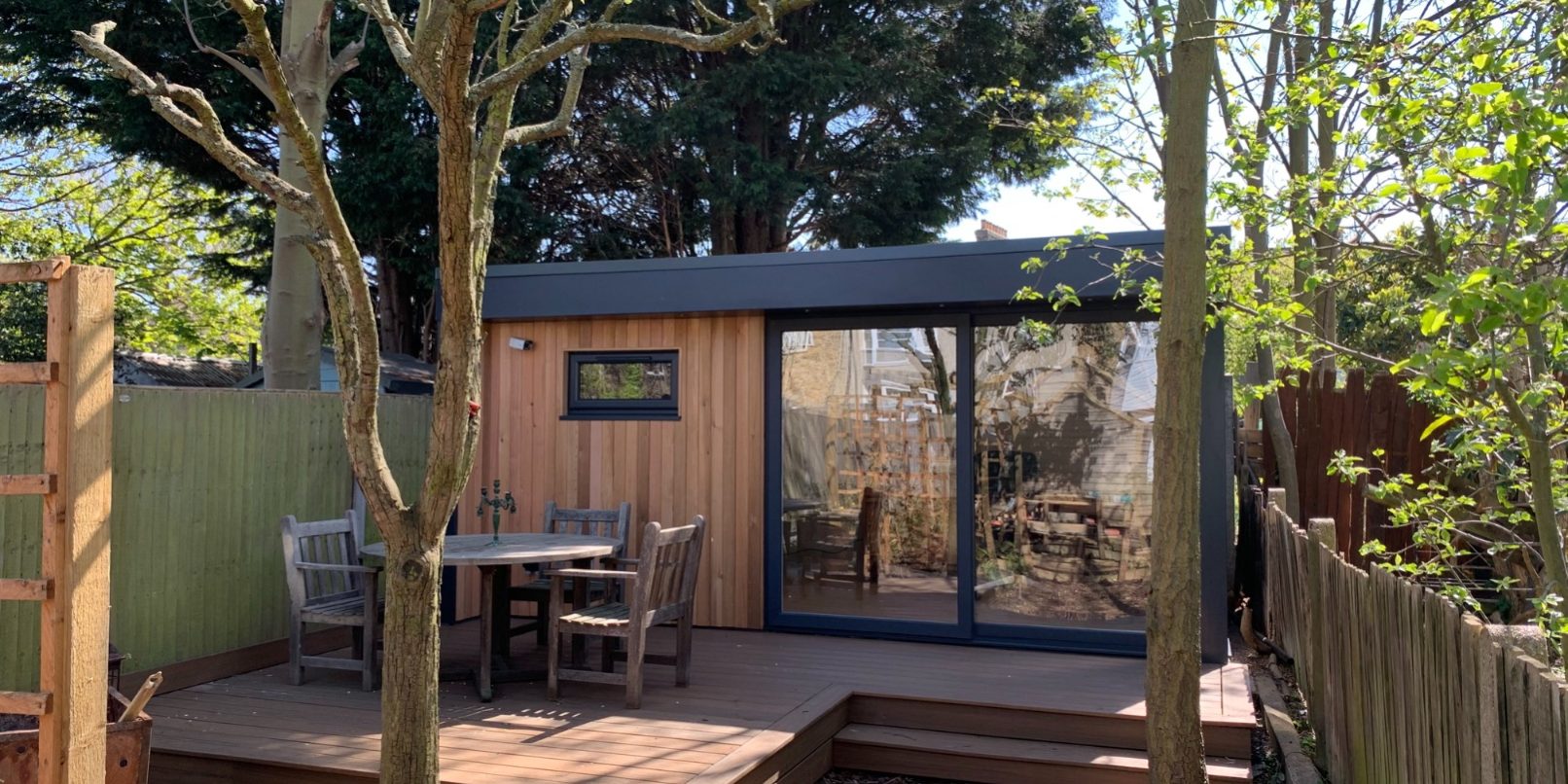
A garden cinema room gives you something no amount of streaming subscriptions can match: a proper, dedicated screening space away from the main house, where you can watch films the way they were meant to be watched. No distractions, no compromises on sound, and no arguments about the TV being too loud.
We have been building garden rooms across South East London, Kent, Surrey, and Sussex since 2004. Over more than 1,000 builds, we have fitted out everything from home offices to music studios. In recent years, garden room cinema setups have become one of the most popular requests we get. It is easy to understand why. The cost of big screen TVs and projectors has dropped sharply, streaming services deliver 4K content as standard, and a well-insulated garden room gives you the perfect shell for a dedicated cinema space that works all year round.
Here is what you need to know to get it right, from room size and screen choice to soundproofing and seating.
Getting the Room Size Right
Room dimensions matter more for a cinema room than almost any other use of a garden building. Too small and you are sitting too close to the screen. Too large and you are wasting space and budget. The sweet spot for a garden cinema room is between 18 and 30 square metres, depending on how many people you want to seat and whether you plan to include extras like a bar area or snack station.
For a cosy two to four person setup, a room around 4 metres wide by 5 metres deep works well. That gives you enough depth for a comfortable viewing distance from a 100 to 120 inch projected image or a 75 to 85 inch television. If you want to seat six to eight people with a bit more breathing room, look at something closer to 5 metres by 6 metres.
Ceiling height matters too. Standard garden rooms typically have internal ceiling heights of around 2.4 metres, which is fine for a television mounted on the wall. If you are using a ceiling-mounted projector, you need to account for the projector itself plus the throw distance to the screen. A short-throw projector is a good solution here because it can sit much closer to the screen wall, freeing up ceiling space and simplifying installation.
The golden ratio for home cinema rooms is often quoted as height multiplied by 1.28 for width, and height multiplied by 1.54 for depth. You do not need to follow this to the letter, but it gives you a useful starting point for getting proportions that work well acoustically.
Projector or Big Screen TV?
This is the first big decision, and there is no single right answer. Both have clear strengths for a garden cinema room, and the best choice depends on how you plan to use the space.
The Case for a Projector
A projector gives you screen sizes that would cost a fortune as a flat panel TV. A decent 4K projector paired with a 100 to 120 inch screen delivers a genuinely cinematic experience for a fraction of what an equivalent-sized TV would cost. Modern laser projectors have come down in price significantly, and models from Epson, BenQ, and Sony offer excellent image quality with high contrast ratios.
The main consideration with a projector is light control. Projected images look their best in a dark room, and any ambient light will wash out the picture. This is actually one area where a garden cinema room has a real advantage over converting a room inside the house, because you can design the building from the outset with blackout in mind. We will cover that in detail below.
You will also need to budget separately for speakers, because projector built-in audio is universally poor. That said, you would want a proper sound system regardless, so this is not really a disadvantage.
The Case for a Large TV
A 75 to 85 inch 4K OLED or QLED television delivers a stunning picture in any lighting condition. You can watch during the day with the blinds open and still get a crisp, bright image. Setup is straightforward: mount it on the wall, plug it in, and you are done.
TVs also handle bright scenes and HDR content better than all but the most expensive projectors, and they require virtually no maintenance. The trade-off is screen size. Even an 85 inch TV is only about 2.1 metres across diagonally, which feels impressive in a living room but does not quite replicate the full cinema experience that a 100 inch plus projected image delivers.
Our Recommendation
If the room will be a dedicated cinema space used mainly in the evenings and at weekends, go with a projector. The larger image size is worth it, and you can design the room around controlling light from day one. If the room will pull double duty as a family room or gaming space that gets used at all hours, a large TV is more practical and more forgiving of daytime light.
Blackout Solutions for Garden Room Glazing
Garden rooms are designed to flood interiors with natural light. That is exactly what you want for an office or lounge, but it is the opposite of what you need for a cinema room. The challenge is managing all that glazing.
There are several approaches, and you can combine them for the best results.
Reduce the Glazing at Design Stage
The simplest solution is to specify less glass from the start. A dedicated garden cinema room does not need floor-to-ceiling bi-fold doors on the front elevation. Instead, you could opt for a solid front wall with a standard door and perhaps one smaller window for ventilation. The screen wall (usually the wall opposite the door) should ideally be solid with no windows at all.
This is one reason why a bespoke garden room makes so much sense for a cinema build. You are not trying to adapt a standard layout. You are designing the shell around the cinema from the ground up.
Motorised Blackout Blinds
For any windows you do have, motorised blackout blinds are the gold standard. They block 99 per cent or more of incoming light and can be operated by remote control or integrated into a smart home system. Side channels and bottom sill channels eliminate the light gaps that standard roller blinds leave at the edges.
Fit the blinds outside the window recess rather than inside it, with generous overlap on all sides. This gives much better light blocking than a recess-mounted blind. The motorised option is worth the extra cost because it adds to the cinema experience: press a button, the blinds come down, and the show begins.
Blackout Curtains
Heavy blackout curtains on a ceiling-mounted track are another effective option, and they add acoustic benefits too. Thick, lined curtains absorb sound reflections from glass, which helps the room sound better. If you have large areas of glazing, curtains are often the most practical solution because they are easy to draw back fully when you want daylight and views.
Sound Systems and Speaker Layouts
Sound makes or breaks a cinema room. You can have a beautiful picture, but if the audio is coming from a soundbar or, worse, your TV’s built-in speakers, you are missing half the experience.
5.1 Surround Sound
A 5.1 system is the entry point for proper home cinema sound: three front speakers (left, centre, right), two rear surround speakers, and a subwoofer for bass. This setup gives you directional sound, so you hear helicopters flying from left to right and dialogue anchored to the centre of the screen. For most garden cinema rooms, 5.1 provides an immersive experience without over-complicating the installation.
Dolby Atmos (5.1.2 or 5.1.4)
If you want to go further, a Dolby Atmos setup adds height speakers that create a three-dimensional sound field. The most popular layout for a home cinema is 5.1.2, which adds two ceiling speakers to the standard 5.1 arrangement. A 5.1.4 system uses four ceiling speakers for even more precise overhead effects. Rain falling above you, aircraft passing overhead, stadium crowds surrounding you: Atmos makes all of these feel remarkably real.
Garden rooms are actually well suited to Atmos installations because the ceiling is accessible during the build. We can run speaker cables and position mounting points before the ceiling lining goes on, which makes installation far cleaner and cheaper than retrofitting into an existing room.
Speaker Placement
Position your front speakers at ear height when seated, which is typically around 1.1 to 1.2 metres from the floor. Surround speakers should be slightly above ear height and to the sides or just behind the seating position. If you are using a projector with a dedicated screen, you can place the front speakers behind an acoustically transparent screen for a cleaner look and better sound imaging.
Soundproofing: Keeping the Peace
One of the biggest advantages of a garden cinema room over a cinema space inside your house is that it is physically separated from your living areas. Nobody upstairs is going to complain about explosions at 10pm. But you still need to think about neighbours, especially if your garden room is close to a boundary.
Wall and Roof Insulation
A well-built, fully insulated garden room already provides a good level of sound reduction. The insulation that keeps the building warm in winter and cool in summer also dampens sound transmission. High-density mineral wool insulation performs better for sound than standard thermal insulation, so it is worth specifying acoustic-grade material if cinema use is a priority.
Acoustic Glazing
Standard double glazing provides moderate sound insulation. If noise leakage is a concern, acoustic laminated glass units offer significantly better performance. They use a special interlayer between the glass panes that dampens sound vibrations. This is a worthwhile upgrade if you plan to run a powerful surround sound system.
Internal Acoustic Treatment
Soundproofing stops sound leaving the room. Acoustic treatment controls how sound behaves inside the room. Without it, a garden room can sound echoey and boomy because the hard, parallel surfaces reflect sound around the space.
Bass traps in the corners of the room are the single most effective acoustic treatment you can add. Low-frequency sound builds up in corners, and bass traps absorb that energy, giving you tighter, cleaner bass from your subwoofer. Acoustic panels on the side walls at the first reflection points (the spots where sound bounces from the speakers to your ears) reduce flutter echo and improve clarity. Thick curtains, upholstered seating, and carpet all contribute too.
You do not need to line every surface with acoustic foam. A few well-placed panels, bass traps in the four vertical corners, and some soft furnishings will make a noticeable difference.
Seating for Your Garden Cinema Room
Comfortable seating is essential. You are going to be sitting for two hours or more at a time, so this is not the place to cut corners.
Cinema Recliners
Dedicated cinema recliners give you the authentic screening room feel. They come with built-in cup holders, USB charging ports, and power recline mechanisms. You can buy them as individual seats or as connected rows of two, three, or four. Prices in the UK start from around 250 pounds per seat for a basic manual recliner and go up to over 1,000 pounds for powered models with extras like heated seats, LED lighting, and built-in speakers.
For a garden cinema room seating four people, a pair of two-seater cinema recliners arranged in a single row works well. If you have a deeper room and want to seat six or more, consider two rows with the back row raised on a low platform (around 150 to 200 millimetres high) so everyone has an unobstructed view.
Cinema Sofas
If you prefer something more relaxed, a deep, wide sofa gives you the option to spread out with blankets and cushions. Cinema sofas are a cross between a traditional sofa and a day bed, with extended seat depth so you can stretch your legs. They are particularly popular for family cinema rooms where children want to pile in together.
Bean Bags and Floor Seating
For a more casual setup, large bean bags or oversized floor cushions work surprisingly well, especially for children. They are easy to move around and store, and they add a fun, informal atmosphere. Giant bean bags in leather or faux leather are durable enough for regular use and easy to wipe clean.
Climate Control and Comfort
A room full of people, electronic equipment, and a running projector generates heat. At the same time, a garden room in January can be chilly when you first walk in. Getting the climate right is important for comfort.
Electric panel heaters or underfloor heating will keep the room warm in winter. A programmable thermostat or smart plug lets you pre-heat the space before movie night so it is comfortable the moment you step in. In summer, a small air conditioning unit prevents the room from getting stuffy during long viewing sessions, which is especially important if you have blackout blinds closed and no ventilation from open windows.
A discreet mechanical ventilation unit is worth considering. It provides a constant supply of fresh air without needing to open windows and let in light or outside noise.
Lighting and Atmosphere
Cinema room lighting is all about control. You want to go from fully dark for watching to fully lit for finding your way around, with some ambient options in between.
Dimmable LED downlights on a smart switch give you the main room lighting. Set them to a warm white colour temperature (around 2700K) to avoid the cold, clinical feel of daylight-temperature LEDs. LED strip lighting along the base of the walls or under the seating platform provides a soft glow that helps people move around without ruining the screen image. This is the same principle used in real cinemas, where the floor-level lighting stays on throughout the film.
Recessed LED strips behind the screen or TV (known as bias lighting) reduce eye strain during long viewing sessions by providing a gentle backlight. It is a small detail that makes a real difference to viewing comfort.
Smart lighting control, whether through a dedicated system or simple wifi bulbs, means you can set up scenes: one button for movie mode (all lights off, bias lighting on, blinds down), one for intermission (low ambient light), and one for full brightness.
Extras That Make the Difference
Once you have the core cinema setup sorted, there are a few finishing touches that take it from a room with a big screen to a proper private cinema.
- A mini fridge or drinks cooler. Cold drinks within arm’s reach means nobody has to pause the film and walk back to the house.
- A popcorn machine. It sounds indulgent, but a small countertop popcorn maker costs under 50 pounds and adds genuine cinema atmosphere.
- Acoustic panels in cinema-themed designs. Some manufacturers offer panels printed with classic film posters that double as wall art and acoustic treatment.
- A small bar or drinks station. If your room is large enough, a compact worktop with storage for glasses, a coffee machine, and a few bottles adds a social element for hosting friends.
- Carpet or a large rug. Soft flooring absorbs sound reflections from the floor and feels comfortable underfoot. A dark, short-pile carpet is practical and adds to the cocooning effect of the room.
Planning Permission
Most garden rooms fall within permitted development rights, meaning you do not need planning permission. The standard rules apply: the building must be single storey, not exceed certain height limits, and not cover more than 50 per cent of your garden. A cinema room does not change any of these requirements compared to any other garden room use. If you are in a conservation area or have other restrictions on your property, it is worth checking, but for the vast majority of homes in our area this is straightforward.
How Much Does a Garden Cinema Room Cost?
The cost breaks down into two parts: the building itself and the cinema fit-out.
For the building, a quality insulated garden room in the 20 to 25 square metre range with reduced glazing and acoustic upgrades will typically fall within the same price brackets as our standard builds. Have a look at our buildings and prices page for current figures based on size.
For the cinema equipment and fit-out, budgets vary enormously depending on your ambitions.
- Entry level (around 2,000 to 4,000 pounds). A good 4K projector, a fixed screen, a 5.1 speaker package, blackout blinds, and comfortable seating from a high street retailer. This gets you a genuinely impressive cinema experience.
- Mid range (around 5,000 to 12,000 pounds). A premium projector or 85 inch OLED TV, Dolby Atmos speaker system, motorised blackout blinds, dedicated cinema recliners, acoustic treatment panels, and smart lighting control.
- High end (15,000 pounds and above). A top-tier laser projector with an acoustically transparent screen, a full 7.1.4 Atmos system with in-ceiling and in-wall speakers, custom acoustic treatment, tiered seating, a built-in bar area, and integrated smart home control for the entire room.
Most of our customers who build a garden cinema room spend between 3,000 and 8,000 pounds on the equipment and interior, on top of the building cost. That puts them comfortably in the entry to mid range, which delivers a fantastic result.
Why a Garden Room Beats Converting a Room in the House
You could, of course, convert a spare bedroom or part of your garage into a cinema room. But there are real advantages to putting it in the garden.
First, separation. A garden cinema room is your own private screening space, physically removed from the noise and activity of the house. No one walks through on the way to the kitchen. The children are not woken up by the subwoofer two floors below their bedroom.
Second, you are not losing a room inside your home. A spare bedroom converted to a cinema room is a bedroom you no longer have. A garden room adds space to your property without taking anything away.
Third, you can design it for purpose from scratch. The glazing, insulation, wiring, and layout can all be optimised for cinema use from day one. That is far easier and cheaper than retrofitting an existing room.
And fourth, it adds value to your property. A well-built garden room is a desirable feature for future buyers, and a cinema room has broad appeal. Even buyers who do not want a cinema room can see the potential for other uses.
If you are considering a space that serves as both a cinema and something else, such as a family room, a gaming den, or a home office that converts for film nights, our Multi range is designed for exactly that kind of flexible use.
Getting Started
If a garden cinema room is something you have been thinking about, we would be happy to talk it through. Every build is different, and the right approach depends on your garden, your budget, and how you plan to use the room. We can help with everything from choosing the right size and layout to positioning electrical points for your AV equipment and specifying acoustic upgrades where they will make the biggest difference.
Take a look at our full range of buildings and prices, or get in touch to start the conversation.
Save £5,000 with Our Ambassador Programme
If you would like to save money on your garden cinema room, ask us about our Ambassador Programme. Ambassadors allow us to use their completed build for photography and a small number of viewing visits. In return, they save £5,000 off the price. It is a straightforward arrangement that works well for both sides.