

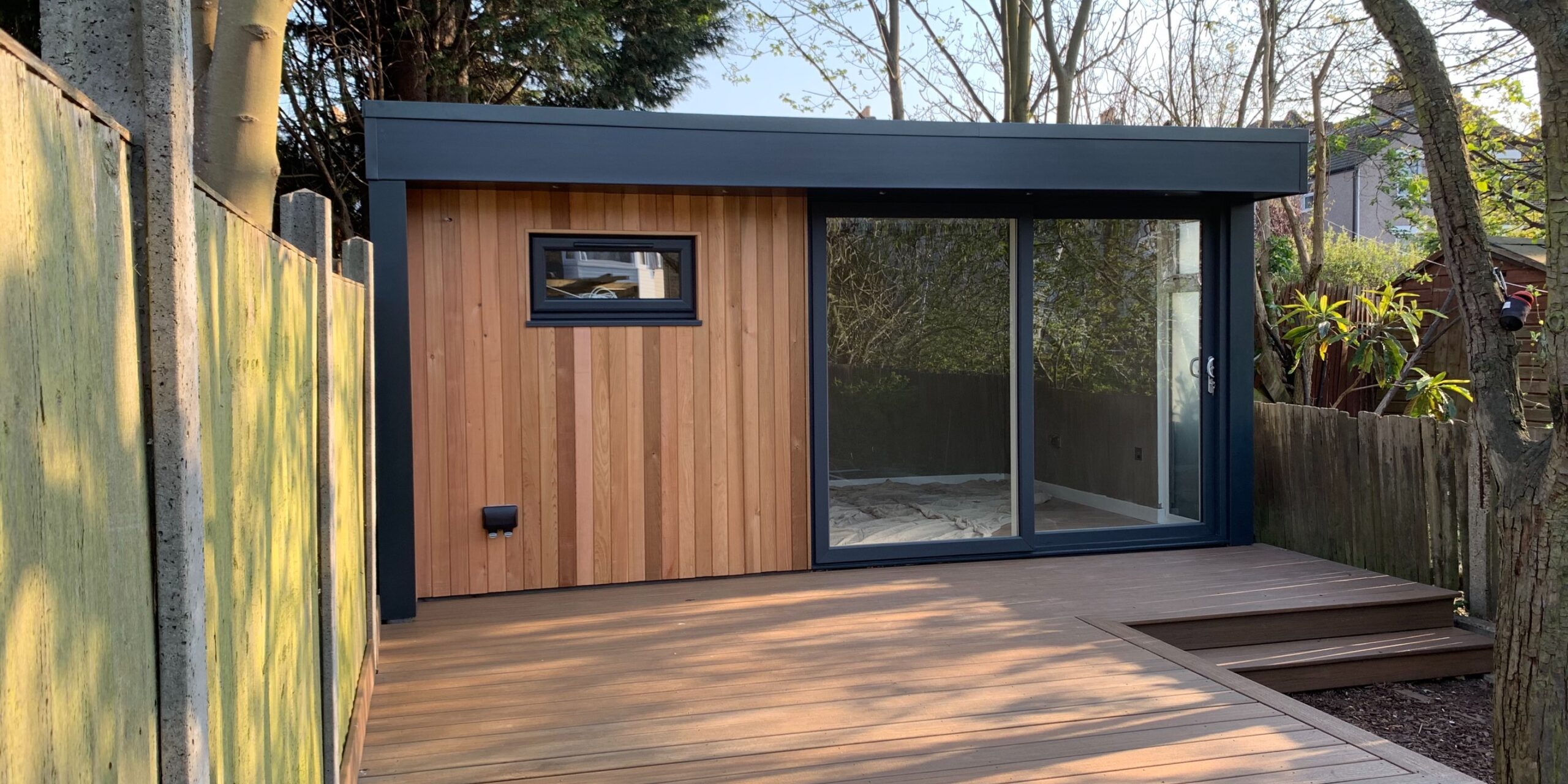
If you are serious about your craft, you have probably run into the same problem most makers face: there is nowhere to leave a project out overnight. The dining table needs clearing for dinner, the spare room doubles as a guest room, and half your supplies end up in boxes under the bed. A garden craft room solves all of that. It gives you a proper, dedicated space to work in, with everything laid out and ready to go whenever the mood strikes.
We have been building garden rooms across South East London, Kent, Surrey, and Sussex since 2004. Over 1,000 builds and counting. A good number of those have been garden art rooms, craft studios, and creative workshops, so we know what works in practice and what sounds good in theory but falls apart once you start using the space.
Here is what to think about if you are planning a garden studio room for crafting, art, or any kind of hands-on creative work.
Why a Separate Space Makes Such a Difference
Crafting at the kitchen table is fine when you are starting out. But once your hobby grows, sharing space with the rest of the household becomes a real friction point. You cannot leave a sewing machine threaded up or a half-finished painting on an easel if someone needs the table for homework.
A garden craft room changes the dynamic completely. Your supplies stay where you put them. Your work in progress sits untouched until you come back to it. There is no rush to tidy up, no guilt about taking over shared space, and no risk of a child or pet getting into your paints or cutting tools.
There is a wellbeing side to it too. Creative hobbies are proven to reduce stress and improve focus, but only if you can actually settle into the work without distractions. Having your own space, even a few steps from the back door, creates a mental boundary between home life and creative time. You walk in, close the door, and you are in your zone.
Choosing the Right Size
Most crafters do well in a room somewhere between 12 and 20 square metres. That gives you enough space for a generous worktable, storage along the walls, and room to step back and look at what you are making without bumping into furniture.
If your craft involves larger pieces (canvas painting, dress-making, furniture upcycling) you will want to look at the upper end of that range. For card-making, jewellery, or small-scale mixed media, something in the 12 to 15 square metre range is usually plenty.
Have a look at our Midi range for mid-sized options, or our Maxi range if you want a larger garden art room with space for multiple work zones. If your garden is an awkward shape or you have very specific requirements, our bespoke garden rooms are designed to fit your exact space and needs.
Layout: Plan Around How You Actually Work
Before you think about colours or furniture, spend a week paying attention to how you craft. Where do you reach for things? How much clear worktop do you need? Do you stand or sit? Do you move between different stations (cutting, sewing, pressing) or stay in one spot?
The answers shape everything. Here are the layout principles that work well in practice.
A Central Worktable
For most crafts, the worktable is the heart of the room. Position it so you can walk around at least three sides. This matters more than people think, especially if you are cutting fabric, working on large canvases, or assembling bigger projects. A table around 150cm by 90cm is a good starting point for most crafts.
If space is tight, consider a wall-mounted fold-down table. It gives you a full work surface when you need it and folds flat when you want floor space for something else, like laying out pattern pieces or photographing finished work for selling online.
Work Zones
If your craft has distinct stages, set up zones for each one. A sewer might have a cutting zone, a machine station, and a pressing area. A mixed-media artist might separate wet work (painting, gluing) from dry work (drawing, cutting). Keeping these apart reduces mess and saves time moving supplies around.
Storage That Actually Works
Storage is where most craft rooms either succeed or fail. The wrong approach leaves you rummaging through boxes looking for a specific shade of thread. The right approach means you can see what you have and grab what you need in seconds.
Go Vertical
In a garden studio room, wall space is your best friend. Pegboards are brilliant for craft rooms because you can reconfigure them as your needs change. Hooks, baskets, and clips hold scissors, tape, ribbons, rulers, and small tools right where you can see them. Floor-to-ceiling shelving along one wall gives you serious storage capacity without eating into your working floor area.
Clear Containers
Craft supplies are often small, colourful, and easy to lose in an opaque box. Clear storage containers, jars, and drawer units let you see the contents at a glance. Label everything. It takes ten minutes and saves you hours over the course of a year.
Rolling Carts
A three-tier rolling cart is one of the most useful pieces of furniture you can put in a craft room. Load it with the supplies for your current project and wheel it next to your worktable. When the project is done, wheel it out of the way. You can have multiple carts for different crafts if you have the floor space, and they tuck neatly against a wall when not in use.
Paper and Flat Supply Storage
If you work with paper, card, vinyl, or fabric, vertical organisers and slot storage keep flat materials sorted by colour or type without creasing or bending them. A simple paper rack on the wall does the job and costs very little.
Lighting: The Most Underrated Part of a Craft Room
Poor lighting is the fastest way to ruin a crafting session. Eye strain sets in, colours look wrong, and fine detail work becomes a struggle. Getting the lighting right is one of the most important decisions you will make.
Natural Light
Natural light is ideal for colour-sensitive work like painting, fabric selection, and colour matching. Position your main workspace near the largest windows so you benefit from daylight for as much of the day as possible. North-facing light is particularly prized by painters because it is consistent and cool, without the harsh shadows and colour shifts caused by direct sunlight.
That said, even in a well-glazed garden room, natural light alone is not enough for the UK winter. You need a solid artificial lighting setup to carry you through the shorter days.
Colour Temperature and CRI
This is where it gets a bit technical, but it matters. The colour temperature of your bulbs affects how your materials look. For a craft room or garden art room, aim for bulbs around 5000K. This sits in the neutral daylight range and gives you the most accurate colour rendering. It is the same standard used in textile and printing industries for colour matching.
Just as important is the colour rendering index, or CRI. This measures how accurately a light source shows colours compared to natural light. For craft and art work, look for bulbs with a CRI of 90 or above. Anything below that and your reds, greens, and blues start to look slightly off, which is a real problem if you are choosing fabrics, mixing paint, or selecting beads.
Task Lighting
Even with good overhead lighting, you will want a dedicated task light at your main work station. An adjustable LED desk lamp or a swing-arm wall lamp lets you direct bright, focused light exactly where you need it. This makes a huge difference for detail work like hand-sewing, fine brushwork, or jewellery making. Look for a lamp with adjustable brightness and colour temperature so you can adapt it to different tasks.
Overhead Lighting
Recessed LED downlights are popular in garden rooms because they do not reduce headroom. Fit them on dimmer switches so you can raise the brightness for detailed work or soften it when you are just pottering. If your room has a pitched roof, consider track lighting, which lets you angle individual lights towards different work zones.
Ventilation: Keeping the Air Clean and Safe
This is one area that gets overlooked, and it should not be. Many craft and art materials release volatile organic compounds (VOCs) into the air. Oil paints, spray adhesives, varnishes, resin, solvent-based inks, and certain glues all fall into this category. Even if you cannot smell anything, fumes can build up in an enclosed space and cause headaches, dizziness, or longer-term health problems.
If your craft involves any of these materials, plan your ventilation properly from the start.
Opening Windows and Doors
The simplest approach is cross-ventilation through opening windows on opposite sides of the room. French doors that open wide in summer give you plenty of airflow. This works well for low-fume crafts like sewing, paper crafts, and general making.
Mechanical Ventilation
For anything involving solvents, resin, spray paint, or heavy gluing, you will want a mechanical extractor fan. Position it on the wall opposite your fresh air source so that clean air flows past you and pushes fumes away from your face towards the extractor. This is called local exhaust ventilation, and it is the most effective way to deal with airborne chemicals in a small space.
A basic extractor fan is straightforward to include in the design of a garden room, and it is much easier to fit during the build than to retrofit later.
Air Purifiers
For an additional layer of protection, a standalone air purifier with a carbon filter can capture VOCs and fine particles. This is worth considering if you do resin work, airbrushing, or any process that creates fine dust.
Flooring: Practicality First
In a craft room, your floor will get glue on it, paint on it, pins dropped on it, and all sorts of offcuts and scraps scattered across it. Choose accordingly.
Luxury vinyl tile (LVT) is the most practical choice for most craft rooms. It is fully waterproof, wipes clean easily, handles dropped scissors and craft knives without cracking, and comes in a wide range of finishes. It also works well with underfloor heating if you want a warm floor underfoot during winter sessions.
Avoid carpet at all costs. It traps small items like beads and pins, stains permanently when paint or ink spills on it, and is a nightmare to keep clean in any kind of making space. If you want some warmth underfoot at your main work station, a washable rug or an anti-fatigue standing mat is a much better solution.
Electrical Planning
A craft room needs more sockets than you think. Between a sewing machine, an overlocker, a heat press, a Cricut or cutting machine, a desk lamp, a laptop or tablet, a phone charger, and maybe a kettle, you can easily fill eight or ten sockets before you have even finished setting up.
Plan your socket layout before the build, not after. Think about where each piece of equipment will sit and put double sockets at worktop height in those locations. It is far cheaper to install extra sockets during the build than to add them later. Also consider having at least one socket on a separate circuit or with a higher rating if you plan to use equipment like a kiln or a heat press that draws more power.
All electrical work in a garden room must comply with Part P of the Building Regulations and should be carried out by a qualified electrician. This is something we handle as part of every build.
Heating and Insulation
A properly insulated garden room is usable year-round, and that matters for crafters. Many materials behave differently in cold conditions. Glue takes longer to set, resin does not cure properly, and sitting still at a sewing machine in a cold room is just miserable.
All our garden rooms come with full insulation (walls, floor, and roof), double-glazed windows and doors, and electric heating. Panel heaters or underfloor heating are the most common choices, and both work well in a craft setting. A programmable thermostat lets you warm the room before you head out, so it is ready when you are.
Making It Your Own
Once the practical elements are sorted, the fun part begins. A garden craft room is your space, and it should feel like it.
Keep the walls light. White or very pale grey is best if you do colour-sensitive work, as dark walls reflect colour onto your projects and make accurate colour matching difficult. If colour accuracy is less critical for your craft, you have more freedom. A feature wall in a colour you love, a noticeboard covered in fabric samples and inspiration images, or open shelving displaying your favourite supplies can all make the space feel personal without getting in the way of work.
Indoor plants do well in garden rooms thanks to the high levels of natural light. A couple of plants on a shelf or windowsill soften the room and make it feel less utilitarian. Just keep them away from your work surface where they might get knocked over.
Think about display space for finished work too. A simple picture rail or a narrow shelf at eye height gives you somewhere to put completed pieces where you can admire them (and photograph them for your website or social media).
Getting Started
If you are thinking about a garden craft room, the earlier you start planning, the better the end result. Things like socket positions, ventilation, lighting circuits, and even the orientation of the building in your garden are all easier to get right at the design stage than to change afterwards.
Take a look at our buildings and prices to see the sizes and specifications we offer. Every build is project-managed by us from start to finish, and we handle all the structural, electrical, and finishing work so you do not have to coordinate multiple trades yourself.
Save £5,000 with Our Ambassador Programme
If you would like to bring the cost down, ask us about our Ambassador Programme. Ambassadors allow us to use their finished garden room for photography and a small number of viewing visits from prospective customers. In return, you save £5,000 off the price of your build. It is a simple arrangement that works well for both sides, and many of our customers take advantage of it.