

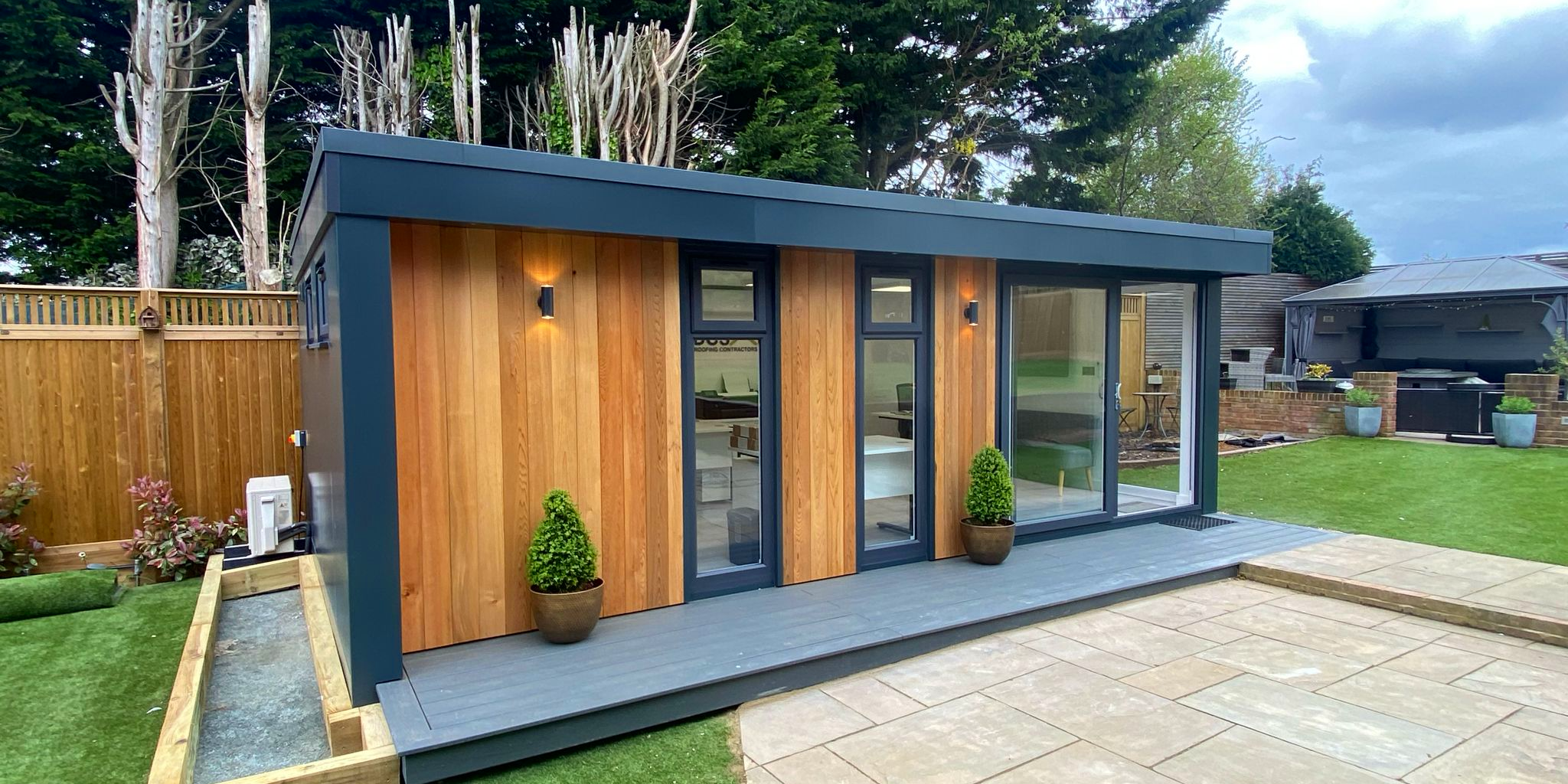
If you are looking for garden room ideas, you have probably already decided you want one. The question now is what kind. After building more than 1,000 garden rooms across South East London, Kent, Surrey, and Sussex since 2004, we have seen every type of setup you can imagine. The ideas that work best always start with the same thing: a clear picture of how the room will actually be used.
Here is what we have learned about choosing the right garden room design for your space, your lifestyle, and your budget.
Start with What the Room Is For
The most common mistake people make is thinking about how their garden room will look before thinking about what it needs to do. A home office has very different requirements from a garden gym, a therapy room, or a bar. Getting clear on the primary use shapes everything else, from the size and layout to the doors, flooring, and electrical setup.
Most of our builds fall into a few main categories. Home offices are still the most popular by a wide margin, followed by gyms, creative studios, entertaining spaces, and treatment rooms for home businesses. Some customers combine two uses in one room, like an office that doubles as a yoga space, or a bar area with a comfortable lounge. If you are planning a dual-use room, design around the primary function and make sure the secondary use does not compromise it.
Garden Room Ideas by Use
Home Office
A garden office gives you something a spare bedroom never can: a proper separation between work and home. You walk across the garden, close the door, and you are at work. At the end of the day, you leave it behind. A solo office works well from 3m x 3m. For two people sharing, 4m x 3m is a comfortable minimum. Prioritise plenty of sockets, good lighting, and reliable internet. Cat6 cabling from the house is worth the small extra cost over Wi-Fi. Our Midi range is popular for dedicated home offices.
Garden Gym
A dedicated gym in the garden means no monthly membership and no excuses. For weights and a bench, 3m x 3m is workable. Add a treadmill or rowing machine and you will want 4m x 4m. Ventilation matters more than you might think: openable windows on opposite walls create a cross breeze that makes a real difference. Rubber gym matting protects the floor, reduces vibration, and is easy to clean. Full-height mirrors help with form and make the space feel bigger.
Garden Bar
A garden bar works particularly well with bifold doors opening onto a patio or decked area. The bar itself can be a simple timber counter with shelving, or a fully fitted unit with a fridge, bottle storage, and under-counter lighting. Add comfortable seating, a dartboard or sound system, and exterior lighting around the entrance for summer evenings. Even a relatively compact room becomes a great entertaining space with the right layout.
Creative Studio
For artists, photographers, and musicians, a garden room keeps your creative work separate from home life. Natural light is key for visual work. Skylights flood the space with daylight without taking up wall space you need for easels and equipment. For music, dense insulation, acoustic plasterboard, and a solid-core door all help contain sound. Even 3m x 2.5m works for a single artist, but 4m x 4m gives you room to spread out.
Therapy or Treatment Room
Garden rooms are increasingly popular with therapists, counsellors, hairdressers, and beauty professionals. The separate entrance gives clients privacy, and you avoid bringing people through your home. Overheads are far lower than a high street unit. Neutral colours, soft lighting, and natural materials create a calm, professional feel. If you are running a business from home, check whether you need to notify your local council. Our page on planning permission and building regulations covers the basics.
Design Styles That Work
Once you know what the room is for, the next question is how it should look. The right style depends on your property, your garden, and your personal taste.
Contemporary Flat Roof
This is the most popular style in the UK right now. A flat roof with a slight pitch for drainage keeps the overall height under 2.5m, which helps with permitted development rules. Clean lines, maximum internal headroom, and a modern feel that suits most properties from the 1930s onwards. Composite cladding or Western Red Cedar on the exterior, with anthracite grey window and door frames, is the combination we fit most often.
Traditional Pitched Roof
For period properties, cottages, or homes in conservation areas, a pitched roof sits more comfortably in the setting. Shiplap or featheredge cladding, Georgian-style windows, and a tiled or slate roof that echoes the main house. The trade-off is height: a pitched roof adds visual mass and may trigger planning considerations if the ridge exceeds 4m. When the style matches the property, though, the result is a building that looks like it has always been there.
Dark Cladding
Black or very dark grey cladding with matching window frames creates a striking, architectural look. Charred timber (Shou Sugi Ban) gives a textured, weatherproof finish. Composite cladding in anthracite is a lower-maintenance alternative. Inside, contrast with bright white walls for a gallery-like feel, or continue the dark theme for something more dramatic.
Choosing the Right Size for Your Garden
Your garden dictates what is possible, and proportion matters more than maximum size. A well-designed small room will always feel better than an oversized one in a cramped garden. Aim to keep at least half the garden as usable outdoor space.
For small gardens, compact rooms from around 2.4m x 2.4m work as focused workspaces for one person. A desk running the full width of the back wall uses every centimetre. For medium gardens, the 4m x 3m to 5m x 3m range is the sweet spot and covers the majority of suburban gardens in our area. Have a look at our standard buildings for this range.
Larger gardens open up more possibilities: pool tables, photography studios, multi-zone rooms with distinct areas for work and relaxation. Our Multi and Multi+ ranges are designed for rooms that need to do more.
Features Worth Considering
The right features make your garden room more enjoyable and more practical. These are the ones we recommend most often.
Bifold doors are the single most requested feature. When open, they fold to one side and remove the barrier between inside and out. Aluminium frames in anthracite grey are the most popular choice: slimmer than timber, warp-free, and clean-looking.
Skylights bring light into the centre and rear of the room where windows cannot reach. Even a single 600mm x 900mm skylight makes a noticeable difference, and opening skylights add useful ventilation for gyms and salons.
A covered veranda extends the usable area without increasing the enclosed footprint. A depth of 1m to 1.5m is enough for a couple of chairs and a coffee table, and it creates a sheltered transition between indoors and out.
A sedum roof covers the top with low-growing succulent plants. It looks beautiful from upstairs windows, supports pollinators, and provides natural insulation. Sedum works on flat or very slightly pitched roofs, making it a natural fit for contemporary designs.
Getting the Interior Right
The interior is where your garden room becomes a space you actually want to use every day. Light neutral walls make smaller rooms feel bigger and let the garden views do the talking. Luxury vinyl tile is the most practical flooring choice for most uses: waterproof, hard wearing, and available in convincing wood and stone finishes.
The biggest furniture mistake is buying pieces that are too large. A desk between 120cm and 140cm wide is usually right for rooms up to 15 square metres. In a compact space, every piece should earn its place. Wall-mounted shelving, built-in storage, and fold-down desks all help you get more from less floor area.
Layer your lighting: recessed LED downlights for general light, a good desk lamp for task work, and accent lighting like LED strips under shelves for warmth in the evening. Smart bulbs that switch between cool daylight for work and warm white for relaxing are genuinely useful in a room that changes function through the day.
What About Planning Permission?
Most garden rooms fall within permitted development, meaning you do not need planning permission. The key rules are: maximum height of 2.5m within 2m of a boundary, maximum overall height of 4m with a dual-pitched roof (3m for other roof types), and the building must not cover more than 50% of the garden area. If your property is in a conservation area or AONB, the rules are tighter. We help with planning queries on every project.
Getting Started
The best garden room ideas start with a clear purpose and a realistic budget. A well-built, fully insulated room starts from around £15,000 to £20,000 for a compact build and can reach £40,000 or more for larger rooms with plumbing and premium finishes. Whatever your budget, spend the money on the structure, insulation, and glazing first. These determine whether your garden room is a year-round space or something you avoid in January.
We have been doing this since 2004. We build every room with our own team, not subcontractors, and we include foundations, full insulation, double glazing, and electrics as standard. Have a look at our buildings and prices page, or get in touch to talk through your ideas.
Save £5,000 with Our Ambassador Programme
If you want a quality garden room at a lower price, our Ambassador Programme offers a genuine £5,000 saving. Ambassadors allow us to photograph their completed build and host a small number of viewing visits. It is a straightforward arrangement that has worked well for hundreds of our customers.