

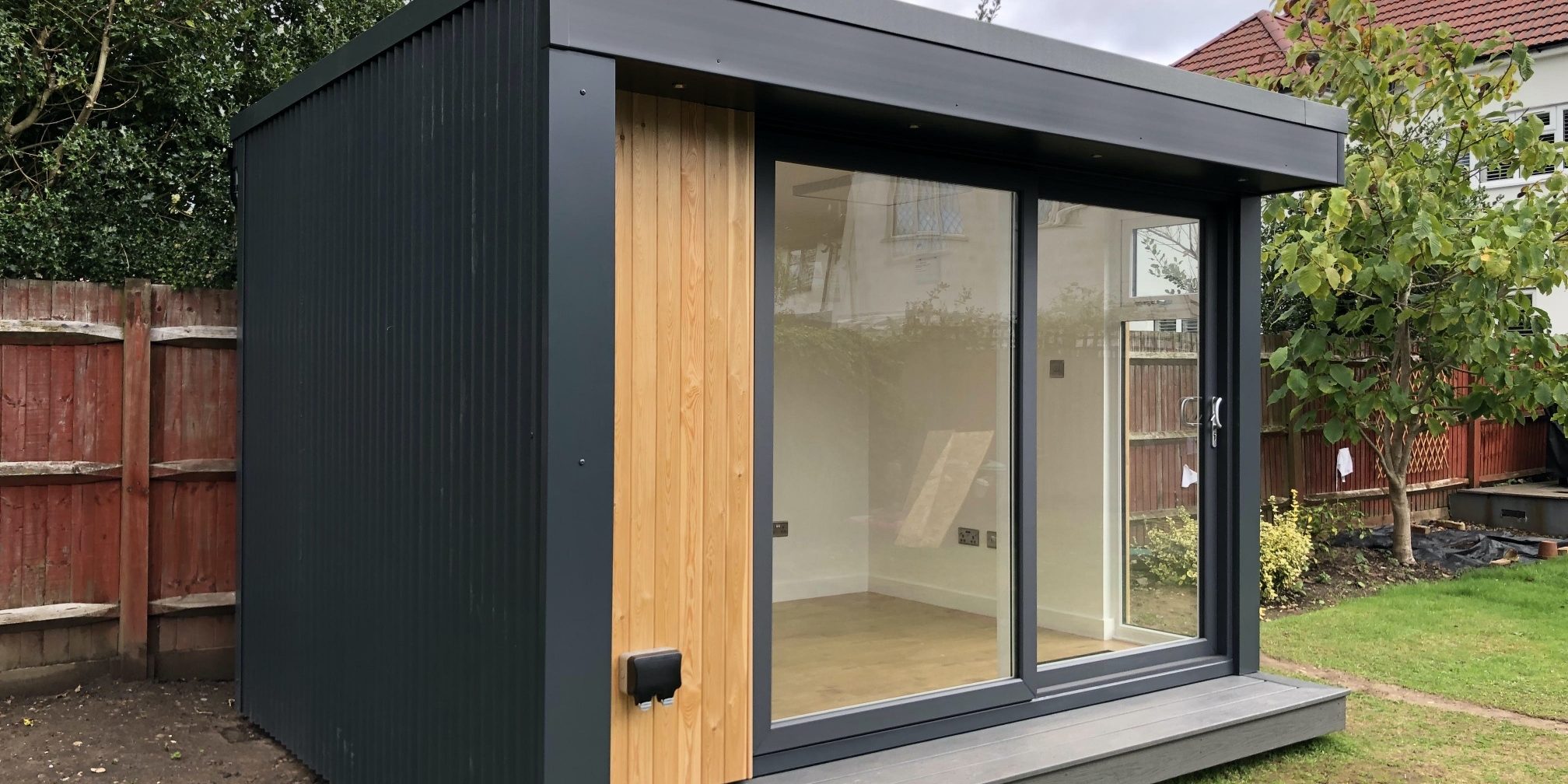
The difference between a garden room you use every day and one that quietly becomes a storage cupboard usually comes down to layout. Get the internal arrangement right and even a compact 12 square metre space feels purposeful and comfortable. Get it wrong and a 24 square metre room can feel cluttered and awkward within a few months.
We have built over 1,000 garden rooms across South East London, Kent, Surrey, and Sussex since 2004. Along the way we have seen which layouts actually work in practice, not just on paper. This guide covers garden room layout ideas for the most popular uses, sized around our three core buildings, so you can plan your space with confidence.
Start With the Use, Not the Furniture
Before you start browsing desks or gym equipment online, sit down and answer one question: what will you actually do in this room on a typical day? The answer shapes everything. A home office needs natural light on the desk without screen glare. A gym needs open floor space and reinforced flooring. A studio needs wall space for storage and clear working room around an easel or workbench.
Write a short list of your daily activities in the space. Then think about what you might use it for in two or three years. A good layout should handle both without a full refit.
Layout Ideas by Garden Room Size
Our three standard buildings give a helpful framework for planning. Each one suits different activities, and the internal layout changes significantly as the footprint grows.
Midi (4.0m x 3.0m, roughly 12 square metres)
The Midi is a generous single-purpose room. At 12 square metres, it comfortably fits a dedicated home office, a compact gym, or an art studio. The key to success at this size is discipline: choose one primary use and build the layout around it.
As a home office: Position your desk along the wall opposite the doors so natural light comes from the side, avoiding glare on your screen. A 1400mm x 700mm desk sits comfortably with room for an office chair to roll back. Add a slim bookcase or wall-mounted shelves on one side wall, and you still have floor space for a small armchair or a narrow sofa for reading breaks. Keep cable management tidy with a trunking run along the skirting.
As a home gym: Push all storage to the walls. Wall-mounted racks for dumbbells and resistance bands free up the central floor area. A 3m x 2m rubber mat section gives you enough room for a weights bench, a rowing machine or exercise bike, and some floor exercises. Avoid placing heavy equipment against external walls where vibration can transfer. If you want a wall-mounted TV for workout videos, position it at eye height on the wall you face most during exercise.
As an art studio: Place your easel near the glazed doors where light is strongest, angled so the main light source falls over your shoulder at roughly 45 degrees to the canvas. A narrow workbench along one side wall holds paints and materials, with wall-mounted pegboard above for tools. Leave at least 1.5 metres behind the easel so you can step back and assess your work from a distance.
Maxi (5.0m x 3.5m, roughly 17.5 square metres)
The Maxi is where multi-purpose layouts become genuinely practical. With 17.5 square metres, you have enough room to create two distinct zones within a single open plan space.
Office plus meeting area: Desk and shelving along the back wall, with a compact two-seater sofa and coffee table near the doors. This works well for anyone who occasionally has clients visit, or who simply wants a space to read and think away from the screen. A rug under the sofa area helps define the two zones visually.
Office plus gym: Desk setup in one half, gym equipment in the other. A freestanding bookcase placed perpendicular to the wall acts as a room divider while also providing storage for both uses. The gym side gets rubber flooring tiles; the office side stays with standard flooring.
Music room or recording studio: The extra width of the Maxi is helpful here. Position your desk and monitors along one wall, instruments and mic stands in the centre, and acoustic panels on the opposite wall. The 3.5 metre width means you can set up a small recording booth in one corner using acoustic screens without losing the rest of the room.
Garden bar and entertaining space: A bar counter along the back wall, around 2.4 metres wide, with bar stools on the room side. A small fridge and shelving sit behind the counter. The remaining floor space takes a couple of armchairs or a sofa, a side table, and possibly a dartboard on the end wall. With bifold doors open in summer, the space flows naturally out onto decking or patio.
Multi (6.0m x 4.0m, roughly 24 square metres)
The Multi gives you serious flexibility. At 24 square metres, you can comfortably run two full activities side by side, or create a single generous space that feels genuinely room-like rather than cabin-like.
Two-zone office and living space: Desk, filing, and work storage along one end. At the other end, a full three-seater sofa, side tables, and a wall-mounted screen. The middle section stays open as a walkway and breathing space between the two zones. This layout works particularly well for people who work from home full time and want the garden room to double as a retreat space in the evenings and at weekends.
Full home gym: With 24 square metres, you can fit a power rack or squat cage, a bench, a rowing machine or treadmill, a dedicated stretching and mat area, and wall storage for dumbbells and kettlebells. Leave at least 1 metre of clearance around each piece of equipment for safe use. Rubber interlocking floor tiles across the full floor protect the subfloor from dropped weights and provide grip.
Workshop or maker space: A long workbench (2.4m or more) along one wall, tool storage above, and a central island workstation give you a proper making space. The 4 metre depth means you can handle sheet materials and long timber without constantly rearranging. Ensure plenty of power sockets at bench height so cables do not trail across the floor.
How to Zone a Multi-Purpose Garden Room
Zoning is how you make one room feel like two or three distinct spaces. It is the difference between a garden room that feels organised and one that feels like everything has been thrown in together. Here are the most effective approaches.
Furniture as Dividers
The simplest zoning technique is using furniture to mark boundaries. A bookcase placed at right angles to the wall creates a visual screen between, say, a desk area and a relaxation area, while also providing useful storage on both sides. The back of a sofa works the same way. You do not need the zones to be fully enclosed. Just a visual break is enough for your brain to register them as separate spaces.
Rugs and Flooring Changes
A rug under the sofa and coffee table instantly signals “this is the sitting area” without any physical barrier. If you are mixing uses that need different flooring, like gym rubber tiles on one side and standard flooring on the other, the flooring change itself becomes the zone marker.
Lighting
Different lighting in different zones reinforces the separation. A bright, cool-toned desk lamp in the work area and warm, dimmable lamps in the relaxation area make each zone feel distinct even though they share the same four walls. Pendant lights or spotlights on separate switches give you control over which zone is “active” at any time.
Colour and Wall Treatments
Painting one end wall a different colour is a simple but effective way to visually separate zones. Alternatively, use artwork or wall-mounted shelving to give each area its own character. One large statement piece above the sofa, and a pinboard or whiteboard above the desk, tells visitors (and your own subconscious) that these are different areas with different purposes.
Practical Layout Tips That Apply to Every Size
Regardless of whether you are working with 12 or 24 square metres, these principles hold true.
Desk Positioning and Natural Light
Never place a desk directly facing a window. The glare on your screen will drive you to close the blinds, which defeats the purpose of all that glazing. Instead, position your desk so the window is to one side. You get natural light on your workspace without it bouncing off your monitor. If your garden room has bifold or French doors, the desk is usually best along a side wall or the back wall, facing into the room.
The 900mm Rule
Leave at least 900mm (roughly three feet) for any walkway between furniture. This is the minimum for comfortable movement without squeezing past things. In a gym layout, increase that to 1000mm or more around equipment for safety. When sketching your layout on paper, draw in the walkways first, then fit furniture around them.
Vertical Storage Saves Floor Space
In a garden room, floor space is precious. Wall-mounted shelves, floating desks, pegboards, magnetic strips for tools, and hooks for bags and headphones all keep the floor clear. Built-in cupboards in alcoves or along short walls are even better if your budget allows. The less clutter on the floor, the bigger the room feels and the more usable it is day to day.
Doors and Traffic Flow
Plan your layout around where the doors are. The path from the entrance to your main working position should be clear and direct. Do not place furniture so you have to weave around it every time you walk in. If your garden room has bifold doors, remember that the opening side needs to stay clear of furniture when the doors are folded back.
Power Socket Positions
Think about where you need power before the build, not after. Sockets behind where the desk will sit, at bench height in a workshop, and near each zone in a multi-purpose room save you from trailing extension leads across the floor. It is far cheaper to add extra sockets during construction than to retrofit them later.
Common Layout Mistakes to Avoid
We see these regularly and they are all avoidable with a bit of planning.
- Buying furniture before measuring. That corner sofa you love might leave only 500mm of walkway. Measure the internal dimensions of your garden room (not the external ones, which are larger) and map furniture to scale on paper or using a free room planner app before ordering anything.
- Forgetting about heating placement. Panel heaters and radiators need wall space. If every wall is covered with furniture or shelving, you have nowhere to put a heater. Plan the heating position as part of the layout, not as an afterthought.
- Overcrowding a small room. A 12 square metre garden room used as both an office and a gym and a reading room will end up working for none of those purposes. At Midi size, commit to one main use and keep the second use minimal. A single yoga mat that rolls away is fine. A full squat rack alongside your desk is not.
- Ignoring the view. Your garden room has windows looking out onto your garden. Arrange the layout so you enjoy that view from wherever you spend the most time, whether that is a desk chair or a sofa. Facing a blank wall when there is a garden view behind you is a missed opportunity.
Getting Your Layout Right Before You Build
The best time to finalise your garden room layout is before construction starts, not after. When you know exactly how the room will be used, we can position doors, windows, sockets, and lighting to suit your plan. Moving a window 300mm to the left might seem like a small thing, but it could be the difference between your desk fitting perfectly or awkwardly blocking half the glass.
If you need something beyond our standard sizes, we design and build fully bespoke garden rooms to your exact specifications. L-shaped builds, internal partition walls, additional doors, and custom window placements are all possible.
Browse our full range with prices to see which size suits your planned use, or get in touch to talk through your garden room plans with someone who has seen what works across more than a thousand builds.
Save £5,000 with Our Ambassador Programme
Want a quality garden room for less? Our Ambassador Programme offers a £5,000 saving on your build. In return, you allow us to photograph your completed garden room and host a small number of viewing visits for prospective customers. It is a straightforward deal that has helped hundreds of our customers get more space for their budget.