

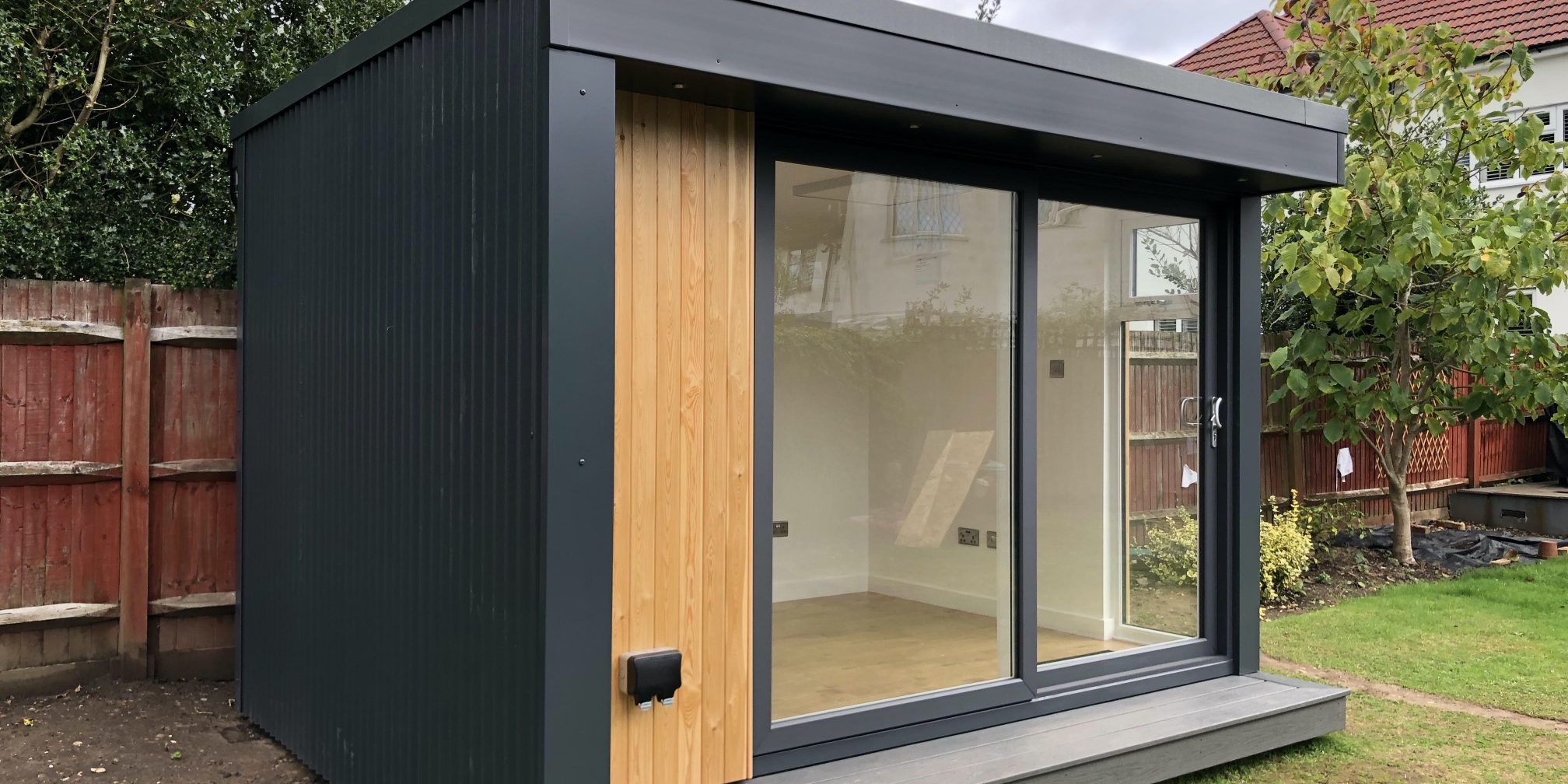
More therapists, counsellors, and beauty practitioners are moving away from rented clinic rooms and setting up their practice in a purpose-built garden room instead. The appeal is obvious. No rent, no commute, no sharing a waiting room with three other practitioners. Just your own space, set up exactly the way you want it, a few steps from your back door.
We have built garden therapy rooms for counsellors, physiotherapists, massage therapists, beauty therapists, and hypnotherapists across South East London, Kent, Surrey, and Sussex since 2004. The requirements vary depending on the type of practice, but the core principles are the same: privacy, comfort, professional presentation, and the right facilities for your clients.
Here is what you need to know before you build a therapy room in your garden.
What Type of Therapy Room Do You Need?
The first thing to work out is what your space actually needs to do. A counselling room has very different requirements from a garden beauty room or a physiotherapy clinic. Getting this right at the design stage saves money and avoids having to retrofit things later.
Counselling and Psychotherapy
A counselling room needs comfortable seating for two or three people, soft lighting, and a calm, uncluttered feel. The critical requirement is soundproofing. Your clients must feel confident that conversations cannot be overheard. You will also need a small waiting area or a way for clients to wait without standing on your doorstep. A toilet nearby is strongly recommended.
Massage, Beauty, and Physical Therapy
A garden treatment room for massage, beauty, or physiotherapy needs a treatment couch or table, a basin with hot and cold running water, wipeable flooring, and enough space to move around the client. You may also need storage for products and towels, a small changing area, and good ventilation. If you offer treatments involving chemicals or wax, an extractor fan is important.
Mixed Use or Multi-Practitioner
Some of our clients build a larger garden room that can serve as a therapy room during the day and a home office or studio in the evening. Others create a space large enough for two treatment areas separated by a partition wall. Both are straightforward to design into a bespoke garden room from the outset.
Planning Permission for a Garden Therapy Room
This is the question we get asked most often, and the honest answer is: it depends on how you use the room.
Under current permitted development rules, you can build a garden room without planning permission provided it meets certain conditions. It must be single storey, no taller than 2.5 metres at the eaves, no more than 2.5 metres total height if within 2 metres of a boundary, and it must not cover more than 50% of your garden area. It must also be “incidental” to the enjoyment of the main house.
That word “incidental” is where therapy rooms get interesting. Working quietly at a computer in a home office is clearly incidental. But if clients are visiting your garden room regularly for appointments, your local planning authority may consider that a change of use from residential to commercial. This does not automatically mean you need planning permission, but it does mean you should check with your local authority before you start building.
In practice, a sole practitioner seeing a small number of clients per day, with no signage, no employees, and minimal impact on neighbours, will often fall within what most councils consider acceptable. But a busy practice with back-to-back appointments, cars coming and going, and a sign by the front gate is a different situation. If there is any doubt, applying for a lawful development certificate gives you certainty. It costs around £120 and confirms whether your intended use is permitted.
For a fuller explanation of the rules, including conservation areas and listed buildings, see our planning permission and building regulations guide.
Professional Body Requirements
If you are a registered therapist, your professional body will have expectations about the space you practise in. These are not always set out as rigid specifications, but they are real and your insurer may ask about them.
BACP (British Association for Counselling and Psychotherapy)
The BACP Ethical Framework requires practitioners to provide a space that supports confidentiality and client safety. In practical terms, this means a room that is quiet, private, free from interruptions, and where conversations cannot be overheard. BACP’s private practice toolkit recommends a space that is clutter free, consistently available at the same time each week, and has secure storage for client records either on site or nearby.
Beauty and Complementary Therapy Bodies
If you are running a garden beauty room or offering complementary therapies, bodies like the FHT (Federation of Holistic Therapists) and VTCT typically expect a clean, hygienic workspace with handwashing facilities, appropriate ventilation, and proper waste disposal. You may also need to register with your local council’s environmental health team, particularly if you carry out treatments involving skin piercing, such as acupuncture or electrolysis.
Physiotherapy and Allied Health
Chartered physiotherapists registered with the HCPC must work from premises that meet their professional standards. This includes adequate space for movement and exercise, appropriate equipment storage, and clear emergency access.
Soundproofing: The Most Important Detail for Counsellors
If you are a counsellor or psychotherapist, soundproofing is not optional. It is fundamental to the therapeutic relationship. Clients will not speak openly if they think someone outside can hear what they are saying. And you have an ethical obligation to protect their confidentiality.
A standard garden room with good quality insulation will already perform well against external noise. But for a counselling room, you need to go further. The goal is to prevent speech from being intelligible outside the room.
The key areas to address are walls, doors, windows, and the ceiling. For walls, acoustic insulation such as mineral wool between the studs makes a significant difference. Adding a layer of acoustic plasterboard on top of standard plasterboard, with a resilient bar between them, creates a decoupled wall that dramatically reduces sound transmission.
Doors are often the weakest point. A hollow internal door will leak sound badly. Fit a solid core door with acoustic seals around all four edges, including a drop seal at the bottom. Windows should be double glazed as a minimum, and triple glazing is worth considering for rooms close to boundaries. If the room has bifold or sliding doors, keep them closed during sessions and consider adding a curtain or blind to reduce sound reflection.
A white noise machine placed outside the therapy room door is a simple, low cost addition that many counsellors use. It masks any residual sound leakage and reassures clients that their privacy is protected.
Facilities Your Garden Therapy Room Needs
The exact fit out depends on your discipline, but here is what most therapy rooms require as a minimum.
Running Water
A basin with hot and cold running water is essential for any treatment room and highly recommended for counselling rooms too. It means clients can wash their hands, and you can maintain basic hygiene between appointments. Plumbing a garden room involves trenching a water supply and waste line from the house. The cost depends on distance, but typically runs between £1,500 and £3,500 for supply and drainage combined.
Toilet Facilities
For any practice where clients are visiting, a toilet is close to essential. Your clients should not have to walk through your house to use the bathroom. A compact WC with a basin can be fitted into as little as 1.2 square metres. A macerator system like Saniflo keeps drainage costs down if gravity drainage is not practical. Expect to add £4,000 to £6,000 for a toilet and basin with drainage.
Waiting Area
Even a small waiting area makes a big difference. If your sessions run back to back, the next client needs somewhere to sit. This can be as simple as a chair and a small table inside the entrance, separated from the therapy space by a partition or screen. Alternatively, if you have side access to the garden, a covered porch with a bench works well in warmer months.
Heating and Ventilation
Your garden therapy room needs to be warm in winter and comfortable in summer. Electric panel heaters or underfloor heating are the most common choices. Air conditioning is worth considering, especially for treatment rooms where clients may be undressed and need a consistently warm environment. An extractor fan is important if you use any products that produce fumes.
Flooring
For treatment rooms, luxury vinyl tile is the best option. It is warm underfoot, easy to clean, hygienic, and hard wearing. For counselling rooms, carpet creates a warmer, more comfortable feel. Choose a low pile, stain resistant option that is easy to keep clean.
Lighting
Avoid harsh overhead fluorescents. Dimmable LED downlights combined with table or floor lamps give you control over the atmosphere. Many therapists prefer softer, warmer lighting to help clients feel at ease.
Insurance for a Home Therapy Practice
Running a therapy practice from a garden room affects two types of insurance: your professional insurance and your home insurance.
Your professional indemnity and public liability insurance needs to cover you for seeing clients at your home address. Most therapy insurance policies do cover home-based practice, but check the wording carefully. Public liability cover protects you if a client trips on the garden path or is injured on your property. Treatment liability cover, relevant for beauty and physical therapists, protects against claims arising from the treatment itself. Annual premiums for therapist insurance typically start from around £70 to £150 per year.
You also need to tell your home insurer that you are seeing clients at your property. Failing to do so could invalidate your home insurance if you need to make a claim. Some home insurers will add a business use endorsement at little or no extra cost. Others may charge a small additional premium. A few may not cover it at all, in which case you may need to switch provider.
Client Access and Privacy
Think carefully about how clients will reach your garden therapy room. The ideal setup is side gate access directly to the garden, so clients never need to enter your house. This protects your family’s privacy and gives the practice a more professional feel.
If side access is not possible, a clear path through the garden from the back door works, but you will need to manage the logistics of letting clients through the house. For counsellors in particular, client anonymity matters. Two clients should not see each other if possible. Staggering appointments by 10 to 15 minutes and having a clear entry and exit route helps with this.
Other practical details: make sure the path to your garden room is level, well lit, and safe in wet weather. A motion sensor light at the entrance is a small touch that makes a big difference on dark winter evenings. If parking is limited on your street, mention this to clients when they book.
What Size Garden Room Do You Need?
For a counselling room with a small waiting area, 3.6m x 3m (roughly 11 square metres) is the minimum that works comfortably. If you want to add a toilet, you will need at least 4m x 3.6m (around 14 square metres).
For a treatment room with a couch, basin, and some storage, 4m x 3m (12 square metres) is a workable minimum. A more generous 5m x 4m (20 square metres) gives room for a proper waiting area, a WC, and a treatment space that does not feel cramped.
If you are planning couples counselling or need space for a treatment couch plus exercise area for physiotherapy, go larger. A 5m x 5m or 6m x 4m layout gives you genuine flexibility.
To see our standard sizes and get a sense of pricing, visit our buildings and prices page.
The Financial Case for a Garden Therapy Room
Renting a therapy room in London, Kent, or Surrey typically costs between £10 and £25 per hour, or £400 to £1,000 per month for regular use. Over five years, that is £24,000 to £60,000 in rent alone, with nothing to show for it at the end.
A well-specified garden therapy room costs between £20,000 and £45,000 depending on size, specification, and whether you include plumbing. That is a one-off cost that you own outright, can use whenever you like, and that adds value to your property. Most therapists who move from rented rooms to a garden room tell us it pays for itself within two to four years.
You may also be able to claim a proportion of the cost as a business expense if you are self-employed. Speak to your accountant about capital allowances and the proportion of use that qualifies.
Save £5,000 with Our Ambassador Programme
If you are planning a garden therapy room, our Ambassador Programme can save you £5,000 on the total cost. In return, you allow us to photograph the completed build and host a small number of viewing visits for prospective customers. It is a straightforward arrangement that has helped hundreds of our customers get a better garden room for less. Get in touch to find out if your project qualifies.