

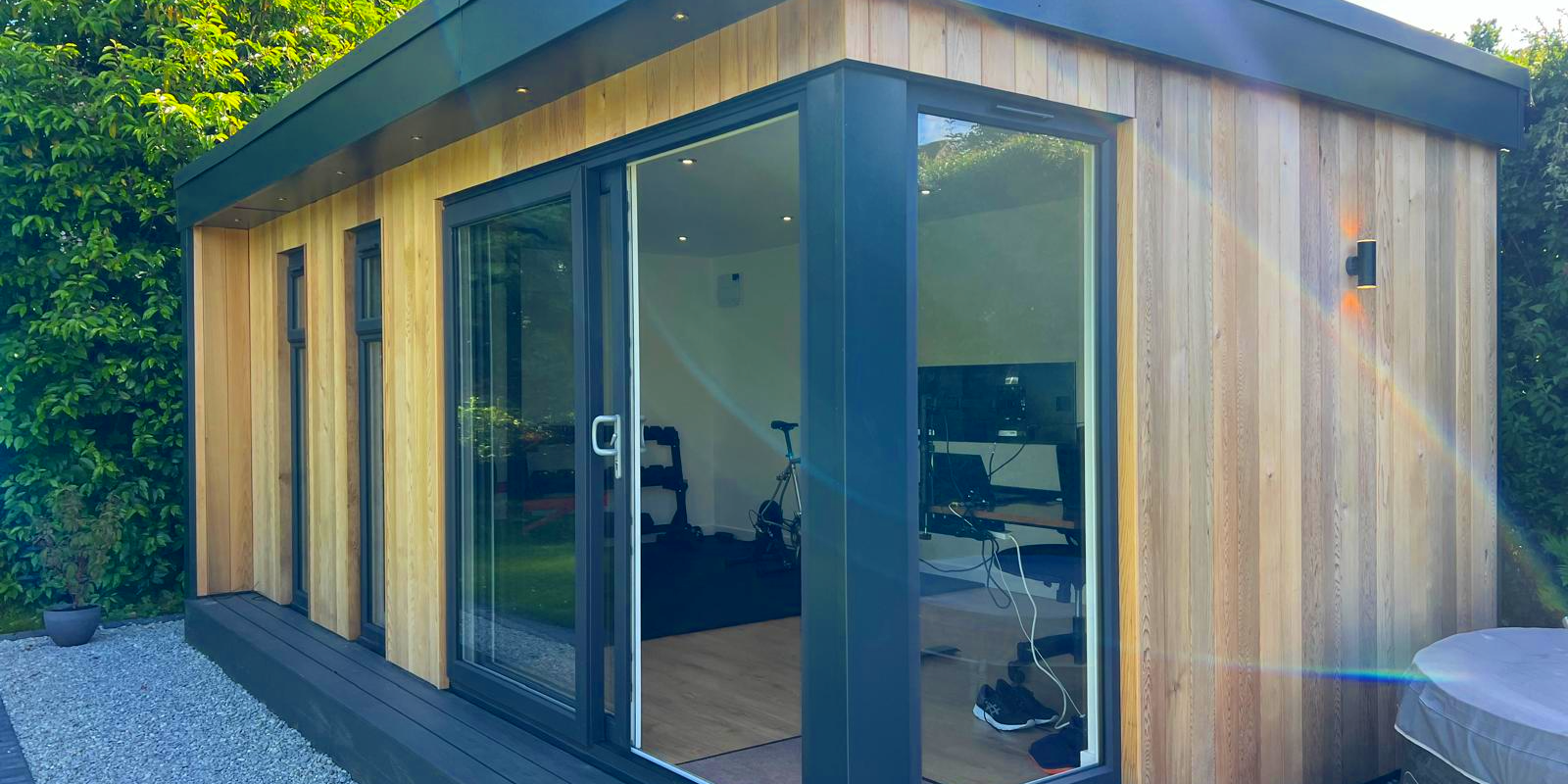
If you run a limited company and work from home, you have probably wondered whether the company can just buy you a garden office. It is a sensible question. The company has money, you need a workspace, and a garden office solves the problem. But the tax position is more complicated than most people expect, and getting it wrong can cost you more than doing nothing at all.
We have built over 1,000 garden rooms across South East London, Kent, Surrey, and Sussex since 2004. A good number of those were for company directors working from home. We are not accountants, so this article is not tax advice. But we have heard enough from customers and their accountants to give you a clear, plain English overview of how this works and where the pitfalls are.
The Short Answer: Yes, But It Is Not Straightforward
Your limited company can pay for a garden office. There is nothing stopping the company writing a cheque or making a bank transfer to a garden office supplier. The real question is what happens next on the tax side, and the answer depends almost entirely on how the office is used.
The key issues are:
- The building itself is capital expenditure, not a day to day business expense
- You cannot claim corporation tax relief on the structure
- Some parts of the build do qualify for capital allowances
- If there is any personal use, you will likely face a benefit in kind charge
- VAT recovery is possible but conditional
- There are capital gains tax implications when you sell your home
Let’s go through each of these.
The Building Cost: Capital Expenditure, Not a Tax Deduction
When your limited company pays for a garden office, HMRC treats the cost as capital expenditure. This means the building cost is not deducted from your company’s profits like a normal business expense such as stationery, software, or travel.
You might think the Structures and Buildings Allowance (SBA) would help. It provides tax relief for commercial buildings at 3% per year. Unfortunately, it does not apply to structures built on residential property. Since your garden office sits in the grounds of your home, the SBA is off the table.
In plain terms: the company pays for the building, but the cost of the structure itself does not reduce your corporation tax bill.
What You Can Claim: Capital Allowances on Fixtures and Fittings
While the building structure does not attract tax relief, certain elements within it do. These qualify for capital allowances through the Annual Investment Allowance (AIA), which currently provides 100% upfront tax relief on the first one million pounds of qualifying expenditure per year.
Items that typically qualify include:
- Integral features. Electrical wiring, lighting systems, heating installations, hot water systems, thermal insulation, and air conditioning units.
- Plant and machinery. Computers, monitors, printers, freestanding air conditioning units, and other business equipment.
- Furniture and fittings. Desks, office chairs, shelving, filing cabinets, fitted cupboards, and floor lamps.
- Utility installations. The cost of installing electricity, water supply, and broadband cabling to the garden office falls under the Plant and Machinery Allowance.
This is where proper invoicing matters. Ask your garden office supplier to itemise the invoice clearly, breaking out the costs of fixtures, fittings, insulation, electrical work, and the structure itself. If everything is lumped into one figure, your accountant will have a much harder time identifying what qualifies for relief. We always provide itemised invoices when customers ask, and we would recommend you do ask.
Running Costs: These Are Tax Deductible
The good news is that the ongoing running costs of a garden office used for business are allowable deductions against corporation tax. These include:
- Electricity and heating
- Water (if separately metered, this is straightforward; if not, a fair percentage of household bills can be claimed)
- Broadband or dedicated internet connection
- Repairs and maintenance
- Cleaning costs
- Insurance
You do not need a separate energy account. Your accountant can calculate a fair proportion of household bills to allocate as business use, typically based on floor area or metered usage.
A properly insulated garden office keeps these running costs low. Our builds use 100mm PIR insulation in walls, floor, and roof, which dramatically reduces heating requirements compared to a basic timber cabin. That matters both for comfort and for the ongoing expense your company is paying. You can see our full specifications and standard range with prices here.
Benefit in Kind: The Big One to Watch
This is where most directors run into trouble. A benefit in kind (BIK) charge arises when a company owned asset is made available for the private use of a director or employee. If your garden office is used for anything other than work, even occasionally, HMRC can classify it as a taxable benefit.
The BIK charge is calculated at 20% of the market value of the office when it was first provided, plus any running costs covered by the company. This is charged every year, not just once.
A Worked Example
Say your limited company pays £25,000 for a garden office. The annual BIK chargeable amount would be £5,000 (20% of £25,000). If the company also pays £1,000 per year in running costs, the total BIK is £6,000.
As a higher rate taxpayer at 40%, you would owe £2,400 in personal income tax on that benefit. The company would also pay Class 1A National Insurance at 15% on the £6,000, which adds another £900. That is £3,300 per year in combined tax, every year, for as long as the company owns the office and it is available for your personal use.
Even at basic rate (20%), the personal tax on a £6,000 BIK is £1,200, plus the company’s £900 NI contribution.
Can You Avoid the BIK Charge?
To avoid BIK entirely, you must prove the garden office is used exclusively for business purposes. The word “exclusively” is doing a lot of heavy lifting there. HMRC’s default position is to assume that some personal use will occur, because it is in your garden, attached to your home, and available to you 24 hours a day.
If your children ever use it for homework, if you watch television in there on a weekend, if it doubles as a guest room when family visit, that counts as personal use. Even if you genuinely only use it for work, proving that to HMRC can be difficult. They may ask for evidence of usage policies, time logs, or other documentation.
Practical steps that help your case:
- Have a written company policy stating the garden office is for business use only
- Do not put a sofa bed, television, or games console in there
- Keep it furnished and equipped purely as a workspace
- Maintain a log of usage if HMRC ever queries it
- Have your accountant document the business only classification in the company records
Even with all of this, many accountants advise clients to budget for the BIK charge as a realistic cost of ownership. It may still be worth it, but go in with your eyes open.
VAT: Can You Reclaim It?
If your limited company is VAT registered under the standard VAT scheme, you can reclaim the VAT on the cost of purchasing a garden office, provided it is used for business purposes.
There are some conditions to be aware of:
- Business use only. If the office is used 100% for business, you can reclaim 100% of the VAT. If there is mixed use, you can only reclaim the business proportion.
- Goods vs services. VAT on goods (the building materials, the structure itself) can be reclaimed. VAT on services (installation, fitting out, connecting utilities) is treated differently. Some accountants advise getting separate invoices for materials and labour to make reclaiming cleaner.
- Flat Rate Scheme. If your company uses the Flat Rate VAT Scheme, you can only reclaim VAT on a single capital goods purchase exceeding £2,000 including VAT. Make sure the invoice is structured accordingly.
On a £25,000 garden office, the VAT at 20% is £5,000. Being able to reclaim that is a significant saving, so it is worth getting the paperwork right from the start.
Capital Gains Tax: The Hidden Catch When You Sell Your Home
This is the one that catches people off guard. Your main home is normally exempt from Capital Gains Tax (CGT) when you sell it, thanks to Private Residence Relief. But there is an exception: if any part of the property has been used exclusively for business, that portion of the gain can lose its CGT exemption.
For example, if your garden office and its plot represent 5% of the total property’s floor area and land, then 5% of the capital gain on the sale could be subject to CGT. On a property that has gained £200,000 in value, that would mean £10,000 potentially taxable.
There is a useful workaround here. HMRC only restricts Private Residence Relief where a space is used exclusively for business. If the garden office has some genuine personal use as well (even occasional use as a reading room or hobby space), the full CGT exemption is preserved. Ironically, having a small amount of personal use that triggers a modest BIK charge could protect you from a much larger CGT bill when you sell.
This is exactly the kind of trade off where you need to talk to your accountant about your specific situation.
Other Things to Sort Out First
- Planning permission. Most garden offices fall under permitted development, so no planning application is needed. Our FAQ page covers the rules in detail.
- Mortgage lender. Notify your lender that a limited company will be placing a building on the land. Most are fine with it but want to know.
- Home insurance. Declare the garden office and its contents. Failure to do so could void a claim.
- Business rates. Your local council may decide a business use garden office is separately rateable. This is not automatic for small home offices, but worth checking with the Valuation Office Agency.
- Building ownership vs land. The company owns the garden office on its balance sheet, but the land belongs to you personally. Your accountant should document this properly.
Is It Worth Doing?
For many company directors who work from home regularly, having the limited company pay for a garden office makes financial sense even with the tax complications. The company gets a proper business asset, running costs reduce the corporation tax bill, and you get a dedicated workspace that separates work from home life.
The key is going in with realistic expectations. You will probably face a benefit in kind charge. The structure cost will not reduce your tax bill. But the capital allowances on fixtures, the VAT recovery, and the deductible running costs add up. And the productivity benefit of having a proper office rather than working from a kitchen table is something you cannot put a number on but every home worker recognises.
Talk to your accountant before you commit. Show them this article if it helps start the conversation, but get advice tailored to your company’s specific circumstances, your marginal tax rate, and your VAT position. The rules are not simple, and getting the structure right from day one saves headaches later.
Our Garden Offices for Business Use
We have been building garden offices for company directors, freelancers, and remote workers since 2004. Every build uses 100mm PIR insulation for year round comfort, is constructed by our own team (never subcontractors), and comes with a 10 year warranty. If you need something specific for your business setup, we also design fully bespoke garden offices tailored to your exact working requirements.
Browse our full range and prices, or get in touch to discuss what you need.
Save £5,000 with Our Ambassador Programme
Our Ambassador Programme offers a £5,000 saving on your garden office. In return, you allow us to photograph the completed build and host a small number of viewing visits for prospective customers. It is a straightforward arrangement that has helped hundreds of customers get a better garden office for less.